When I first started ordering supplies for our facility, I assumed foam board was foam board and rubber bumpers were rubber bumpers. Figured it was all commodity stuff — pick the cheapest, move on. Two years and one very expensive mistake later, I realized how wrong I was.
I'm an office administrator for a mid-sized manufacturing plant. I manage all the material ordering — roughly $80,000 annually across about a dozen vendors. I report to both operations and finance, which means I get pressure from both sides: ops wants it yesterday, finance wants it cheaper. Fun balance.
This post is about two things I buy regularly: foam board (like the 16x20 sheets for presentation and insulation backing) and rubber bumper pads (for equipment feet and vibration dampening). Specifically, how to compare suppliers for these items without making the mistakes I did.
The Framework: What I'm Actually Comparing
I'm comparing two approaches to sourcing these materials:
- Option A: Buying from a specialty industrial supplier (like buying direct from Momentive for silicone-based products, or a dedicated foam/rubber distributor)
- Option B: Buying from a general marketplace (Amazon, Uline, or a big-box hardware store)
The comparison dimensions I found matter most are: material consistency, specification accuracy, and total cost (not just unit price).
I'm not a materials engineer (note to self: don't pretend to be one). What I can tell you from a procurement perspective is how to evaluate vendor promises vs. what actually shows up.
Dimension 1: Material Consistency — The 16x20 Foam Board Disaster
Here's where I learned my lesson. We needed 16x20 foam board for a client presentation series. I found a great price on Amazon — about 40% cheaper than our usual supplier. Ordered 50 sheets. Seemed like a win.
What arrived was... technically 16x20 inches. But the density was wrong. They were flimsy, almost like craft foam rather than rigid presentation board. The edges weren't straight — maybe 1/16th inch variance on some sheets. Our graphics team rejected half of them. Cost me $240 in wasted material and rush shipping for replacements (which, honestly, felt excessive).
Meanwhile, our regular specialty supplier (who I'd written off as "too expensive") consistently delivers foam board with a density tolerance of ±0.5% and edge squareness within 0.01 inches per foot. That consistency is invisible until you don't have it.
The verdict on consistency:
Specialty supplier wins hands down. When you need material to perform a specific job — not just look like it on a spec sheet — the consistency matters more than the unit price. The cheap Amazon board wasn't actually cheaper once I factored in the waste and rework.
Dimension 2: Spec Accuracy — Rubber Bumper Pads and Hidden Variables
Rubber bumper pads seem simple, right? They're little feet that keep equipment from sliding or vibrating. I used to think the only variable was size.
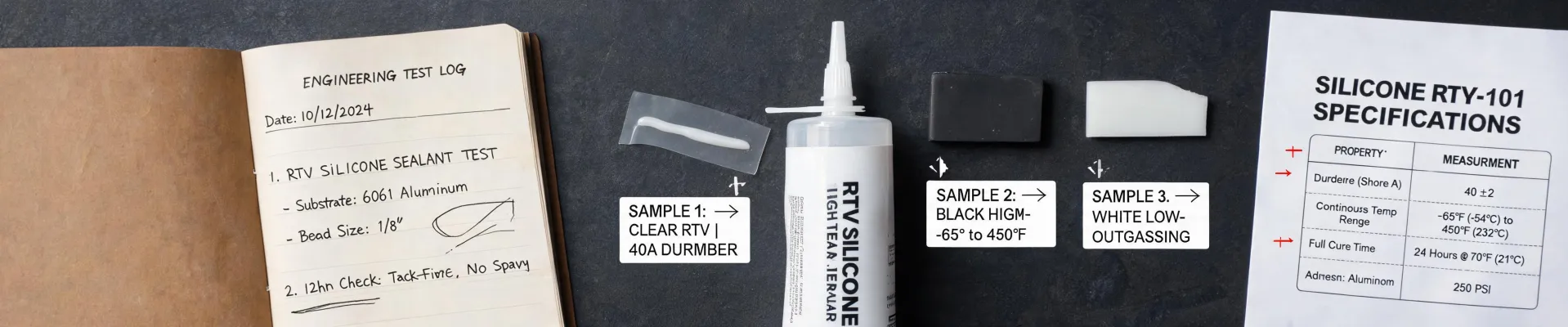
Then we needed bumper pads for a delicate piece of lab equipment — the kind that costs more than my car. The spec called for 60 durometer silicone rubber (that's a hardness scale, for anyone who doesn't deal with this daily). I ordered what I thought was the equivalent from a general supplier.
Wrong move. The material was nitrile rubber, not silicone. They looked identical. The durometer was different — probably 70, not 60. The pads didn't compress properly, the equipment vibrated more than tolerance allowed, and the lab manager was not happy.
Here's what I learned: specialty silicone suppliers (like Momentive's distribution channel) provide material data sheets with actual certified properties. A general marketplace listing might say "rubber bumper" without specifying the polymer type, durometer, or temperature range. The difference can break your application.
The verdict on spec accuracy:
Specialty supplier again, but with a caveat. If you know exactly what you need and can verify the specs yourself, a general supplier might work. But if you're relying on the supplier to provide accurate material data, specialty is safer. The trust factor is real — and expensive to learn.
Dimension 3: Total Cost of Ownership — What The Spreadsheet Misses
This is where the comparison gets interesting, because the answer isn't as obvious as the first two dimensions.
Let me break down the real costs I tracked over a year:
General marketplace (Option B):
- Unit price: $1.20 per 16x20 sheet ($0.80 cheaper than specialty)
- Annual volume: 240 sheets
- Apparent savings: $192/year
- But: 8% rejection rate (19 sheets wasted) = $22.80 lost
- But: Rush orders for replacements (3 times) = $48 in expedited shipping
- But: Time spent verifying specs and handling returns = ~4 hours (call it $120 at my hourly burden)
- Real cost: $190.80 more than appears on the PO
Specialty supplier (Option A):
- Unit price: $2.00 per sheet
- Annual volume: 240 sheets
- Apparent cost: $480
- Rejection rate: <1% (we've had zero rejects in 18 months)
- Consistent delivery, no rush charges
- Real total cost: $480
The specialty supplier cost $192 more on paper but was actually $190.80 cheaper in real terms. That's the part I missed when I first looked at the prices. (Note to self: run the full TCO before switching suppliers.)
The verdict on total cost:
Specialty supplier, but not by as much as you'd think. The gap narrows significantly if you have high-volume, low-rejection needs. But for most industrial use, the specialty supplier ends up cheaper once you account for the headaches.
When To Pick Each Option
After my experiences (and the budget hit from that foam board fiasco), here's my practical rule of thumb:
Go with a specialty supplier (like a Momentive distributor for silicone products) when:
- Material properties affect performance (durometer, density, chemical resistance)
- You need certified material data sheets
- Consistency across batches matters (serial production, matching parts)
- The cost of failure is high (equipment damage, client presentation quality)
- You don't have in-house materials expertise to verify specs
Go with a general marketplace when:
- You know exactly what you need and can verify it yourself
- The application is non-critical (temporary displays, general cushioning)
- You need a small quantity fast and can't wait for specialty delivery
- The cost difference is dramatic and you've accounted for rejection risk
The 48 Hour Print model works similarly: for standard products with known specifications, the speed and price are hard to beat. But for custom materials with critical properties, you want someone who understands the material science — not just someone who moves boxes.
In hindsight, I should have started with the specialty supplier for both items. It took a couple of costly experiments to learn, but now I know: the cheapest quote isn't the cheapest delivery. Check the spec sheet, check the rejection rate, and for God's sake, check what polymer those rubber bumpers are actually made of.