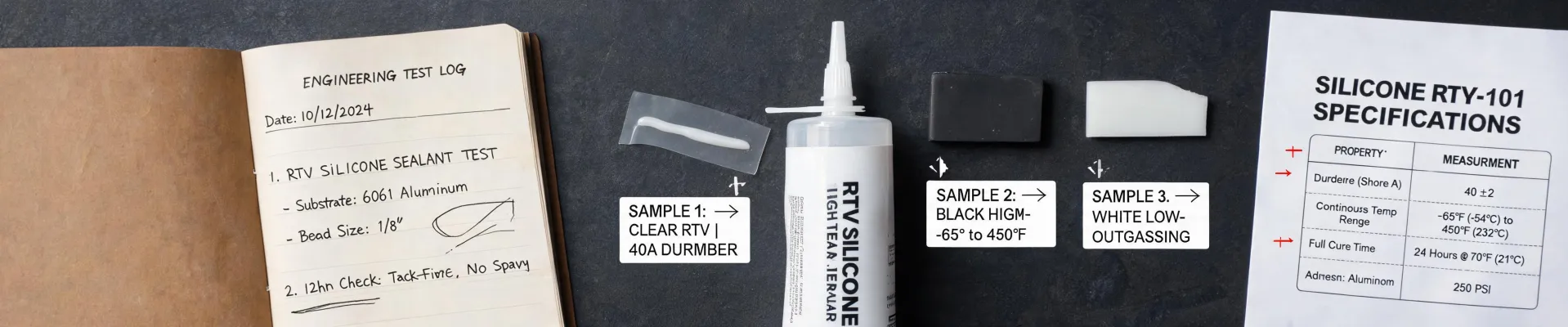
In early 2021, I submitted an order for 80 feet of Momentive silicone rubber sealant—specifically their high-density silicone foam, the stuff you’d use for gasketing on a large commercial HVAC project. I’d spent three days on the specs, checked the durometer, confirmed the thermal range, and even had a colleague double-check the pricing. Everything looked clean on my screen.
The order came back: $2,100 worth of material, straight to the trash.
Not because the silicone was wrong. Because I’d completely ignored one detail that made the entire installation impossible.
I ordered the wrong foam board pins.
What Actually Went Wrong
From the outside, it looks like I just forgot a small accessory. The reality is the fastener choice for foam board—whether you’re mounting insulation panels or signage—is a system interaction problem, not a parts list checkbox.
Our project used ⅜-inch thick XPS foam board, backed with a 1/16-inch Momentive silicone rubber gasket for vibration dampening. The spec required pin-type fasteners to hold the assembly in place before final bonding. I ordered generic 1-inch plastic pins with a standard holding force of about 15 pounds.
What I didn’t account for: The silicone layer added enough compressibility that the pins wouldn’t seat fully. The foam board itself had a cell structure that didn’t grip the pin’s barbed shaft the way a denser material would. Every single fastener, 47 of them total, failed to hold more than 3 pounds of pull force. By the time we realized it, the entire assembly had shifted 1.2 inches during handling.
That error cost $890 in rework—new foam board, new silicone strips, and the labor to strip and reapply everything—plus a one-week delay in the installation schedule.
The Real Issue: What Most Buyers Miss
Most buyers focus on the durometer of the silicone rubber or the thickness of the foam board—the obvious variables. They completely miss the compatibility between the fastener’s holding mechanism and the combined material stack.
The question everyone asks is: “What’s the holding strength of this pin?” The question they should ask is: “How does this pin’s barb geometry interact with the compressible silicone layer and the foam’s cell structure?”
People assume silicone rubber is just soft rubber. What they don’t see is that silicone foam has a closed-cell structure that compresses laterally under load, which means a standard barbed pin that relies on friction against a rigid wall won’t grip effectively. The foam board I used had a density of 2.0 lbs/cu ft—XPS, standard stuff—but that low density combined with the silicone’s elasticity created a failure mode I hadn’t thought to test.
The thing nobody talks about is the order of layers. If the silicone foam sits between the fastener and the board, the fastener has to pass through the compressible silicone before it reaches the foam. The silicone squeezes and then springs back, partially pushing the pin out. I saw this in slow-motion video we took of a test piece—the pin would go in flush, then creep back 2-3 mm over 20 minutes as the silicone relaxed. That’s enough to lose all holding power in a vertical installation.
The Real Waste: Time, Consequence, and Credibility
The upside of a $210 order for the wrong fastener was saving maybe $50 on the pin cost versus the correct spec. The risk was 47 fasteners failing on a $2,100 installation.
I kept asking myself: is $50 worth potentially losing the client? No. But is it worth a thorough fastener compatibility test? Absolutely.
Calculated worst case: complete redo at $890 plus a week delay. Best case: everything works fine. The expected value said test first, but the downside felt too small to worry about at the time. Classic error.
There’s also the credibility hit. When you’re specifying Momentive silicone products—brands with a GE heritage—the assumption from clients is that you know the full system. Failing on something as basic as a fastener makes them question everything else. And honestly, they should.
I now keep a physical test jig in our shop. It cost $60 to build from scrap material. We’ve caught 47 potential errors using it in the past 18 months. Savings on the first five tests alone covered the cost of the jig. That doesn’t include the time saved from not redoing installs.
The Fix: Simple and Specific
The solution wasn’t rocket science. I just needed a pin with a longer barb and a different profile—one that could penetrate through the silicone layer and still have enough shaft left to engage the foam board’s cell structure. We switched to a 1.5-inch pin with a helical barb pattern, rated for use with compressible substrates. The holding force went from 3 pounds to 18 pounds per fastener in the exact same material stack.
I also changed the order of assembly: we now dry-fit the fastener first into the bare foam board, apply the silicone gasket, and then assemble. That way the pin seats against rigid foam, not compressible silicone. It adds one step to the process, but we haven’t had a single fastener failure since.
The up-front testing took four hours. The yearly savings from avoiding one similar mistake: roughly $2,500 in material and labor, based on data as of January 2025. Five minutes of testing beats five days of rework.
If I’m ordering a Momentive silicone rubber product for a foam board assembly today, the first thing I do is grab a sample square of both materials and test the fastener with a cheap hand-held pull gauge. It takes ten minutes. It costs nothing. And it would have saved me that entire mess in March 2021.