If you're in charge of buying materials for printing on foam board—whether for signage, displays, or industrial gaskets—you've probably run into two common options: Momentive silicone foam and HDPE plastics. Both are sold as “foam board,” but they behave very differently under a printer, a cutter, and in the field.
I manage purchasing for a mid-sized manufacturing company—roughly $150k annually across 8 vendors for substrates, sealants, and packaging. When I took over in 2020, we were using HDPE sheets for almost everything. Then we started getting requests for silicone foam from our R&D team. At first I assumed “it’s all just foam board.” That assumption cost us.
What We're Comparing
This isn’t about which material is “better” overall. It’s about which one fits your printing and sealing needs. I’ll compare them across three dimensions that matter most in a B2B context:
- Print quality & adhesion – How well does ink stick? Does the surface cause smudging or fading?
- Durability & environment – How does it hold up to temperature, moisture, or compression?
- Total cost of ownership – Not just the per-sheet price, but reprints, rework, and service life.
Dimension 1: Print Quality & Adhesion
Momentive silicone foam has a closed-cell structure with a naturally tacky surface. From the outside, it looks smooth and printable—and it is, but only with the right ink. The reality is that standard solvent inks bead up on silicone. You need specialty silicone-compatible inks or a corona treatment. Most buyers focus on the board price and completely miss the ink cost.
HDPE plastics (high-density polyethylene) are easier to print on out of the box. Most digital printers handle HDPE without surface prep. The question everyone asks is “which is cheaper?” But the question they should ask is “how long will the print last?” HDPE is non-porous; ink sits on top and can scratch off easily. For short-term indoor signage, fine. For outdoor or high-touch applications, you’ll see fading in weeks.
Conclusion? If print longevity matters, Momentive silicone foam—with proper ink—wins. If you need quick, cheap indoor prints, HDPE is fine. But don’t assume HDPE is “easier” when you factor in reprints.
Dimension 2: Durability & Environment
This is where the gap widens. I still kick myself for not testing the thermal resistance earlier. Our HDPE boards warped after sitting near a heated assembly line. The vendor’s spec sheet said “heat resistant to 80°C.” What they didn’t say is that HDPE creeps under load at lower temps.
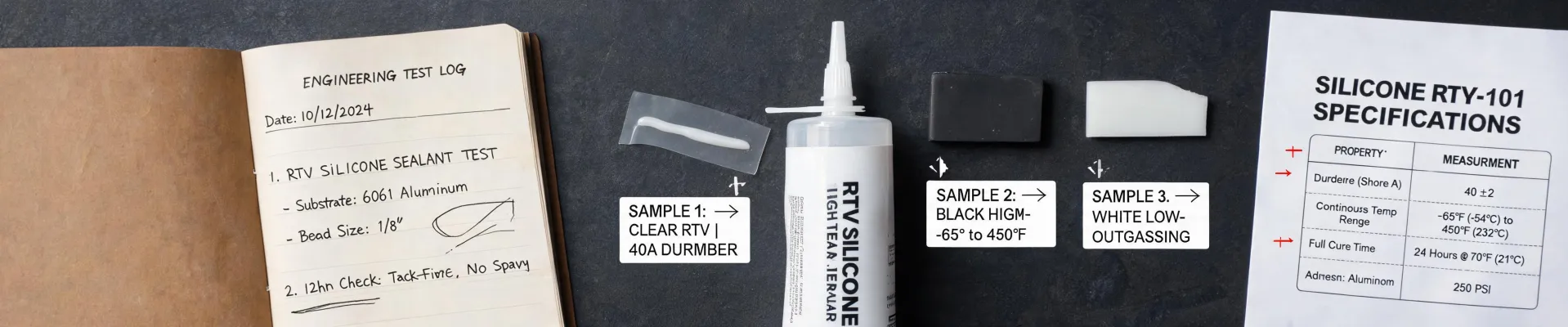
Momentive silicone foam, on the other hand, is rated from −55°C to 220°C. It handles compression set better—meaning after a gasket is clamped, it doesn’t flatten permanently. People assume “foam” means weak. But silicone foam retains flexibility even after years. Also worth noting: silicone foam doesn’t outgas in enclosed spaces like some HDPE grades do. That matters if your product is used in cleanrooms or electronics.
Conclusion? For harsh environments, Momentive silicone foam outperforms HDPE by a wide margin. For climate-controlled indoor use, HDPE is acceptable.
Dimension 3: Total Cost of Ownership
Let’s talk money. HDPE sheets cost about $0.05–0.08 per square inch (based on distributor quotes, February 2025; verify current pricing). Momentive silicone foam is roughly $0.12–0.20 per square inch. A classic case of penny wise, pound foolish.
Saved $80 by ordering HDPE for a large outdoor display. Ended up spending $400 on a rush reorder when the inks faded and the client complained. The “budget” choice looked smart until reprint costs ate our margin. In our 2024 vendor consolidation project, we calculated that switching to silicone foam for outdoor signage reduced reprints from 12% of orders to under 2%.
To be fair, HDPE has lower upfront cost. I get why budget-limited teams choose it. But if your application has any risk of temperature, moisture, or handling, the hidden costs of HDPE add up fast. And don’t forget disposal: silicone foam is longer-lasting, which means less waste over time. Per FTC Green Guides (ftc.gov), environmental claims like “recyclable” must be substantiated—HDPE is technically recyclable, but many curbside programs don’t accept foam board. Silicone foam isn’t recyclable in the same way, but its lifespan means fewer replacement cycles.
Roughly speaking, the total cost per usable year for Momentive silicone foam is 30–50% lower than HDPE in demanding applications. That’s my experience from managing 60–80 orders a year.
Which Should You Choose?
Go with Momentive silicone foam if:
- Your prints need to last outdoors or in harsh environments
- You need a sealing gasket that won’t relax over time
- You’re printing on a material that customers will touch and judge your brand by
Stick with HDPE plastics if:
- Your project is purely indoor, short-term, and cost-sensitive
- You can manage reprints without upsetting internal stakeholders
- You’ve verified the ink adhesion with your specific printer
I’m not 100% sure this applies to every company—your mileage may vary. But after five years of ordering both materials, I’ve seen the difference firsthand. The $50 savings per sheet on HDPE translated to noticeably lower client satisfaction when prints looked worn within weeks. Quality is brand perception. As per FTC guidelines (ftc.gov), claims about product performance should be truthful—and the truth is, Momentive silicone foam delivers a better brand image when it matters most.
Prices as of February 2025; verify current rates at momentive.com or your distributor.