-
There's No Universal 'Best' Material—It Depends on What You're Building
-
Scenario A: High-Heat, Chemical, or Weathering Resistance—Momentive Silicone Rubber Is the Clear Winner
-
Scenario B: High-Flex, Abrasion, or Tear Resistance—TPU Is Often the Better Choice (But Not Always)
-
Scenario C: General-Purpose, Cost-Sensitive, or Non-Critical Parts—Consider the 'Middle Ground'
-
How to Determine Which Scenario You're In
There's No Universal 'Best' Material—It Depends on What You're Building
Over the past 6 years of managing procurement for a mid-sized industrial components manufacturer, I've learned one thing the hard way: the 'best' material doesn't exist. It's like asking whether a wrench is better than a screwdriver. It depends on the fastener.
When a new project lands on my desk asking for a quote on Momentive silicone rubber, or when engineering sends over a spec asking for a TPU alternative to a chlorosulfonated polyethylene rubber part we've been using, I have to dig into the application. I can't just pick the cheapest or the one I'm most familiar with.
I've analyzed maybe 200+ orders for elastomeric parts over the years—maybe 180, I'd have to check the system—and I've come to believe that material selection boils down to three distinct scenarios: high-heat or chemical exposure, high-flex or abrasion applications, and cost-sensitive, general-purpose uses. Let me walk you through each.
Scenario A: High-Heat, Chemical, or Weathering Resistance—Momentive Silicone Rubber Is the Clear Winner
This is where silicone rubber shines. If your part is going to live under a car hood, sit in direct sunlight for years, or come into contact with solvents, acids, or ozone, silicone is probably your best bet.
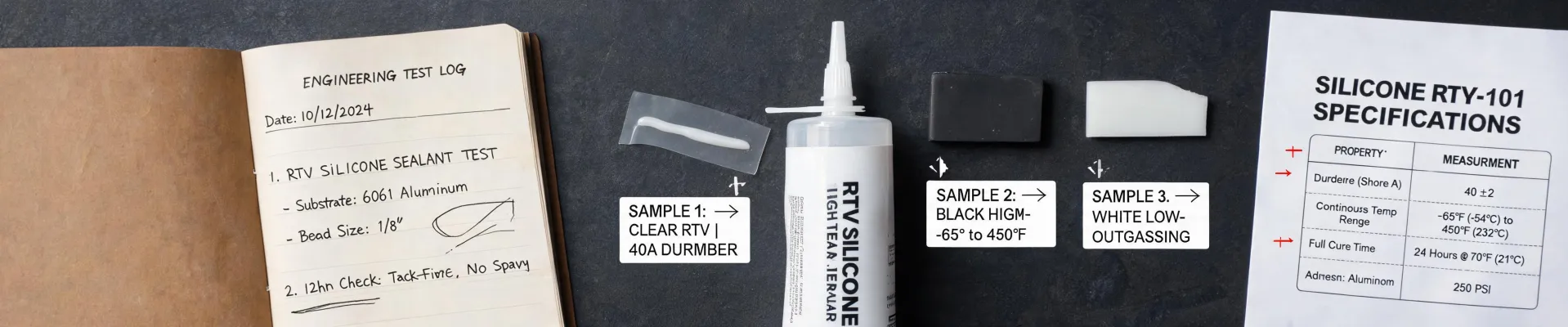
Momentive silicone rubber, in particular, has a strong reputation for extreme temperature tolerance (-60°C to 230°C continuously, sometimes higher for short bursts). I've had suppliers tell me that their silicone formulations from Momentive (originally from GE Silicones—that legacy technology is real) can outperform many organic rubbers by a significant margin in these conditions.
But here's the honest limitation: silicone rubber is not great with abrasion. If your application involves constant rubbing, sliding, or wear against another surface, it's not the right choice. I've seen a project where silicone gaskets in a high-vibration assembly failed prematurely because of edge wear. The engineer had assumed silicone was 'better' across the board. That's a costly assumption.
My experience: I've sourced Momentive silicone parts for sealing applications in outdoor electrical enclosures. The customer had been using a chlorosulfonated polyethylene rubber (CSPE) gasket, which was fine for UV resistance but swelled in contact with certain cleaning solvents. Switching to Momentive silicone solved the chemical swelling issue entirely. The upfront cost was about $0.15 per unit higher, but we saved on warranty claims and replacements. That's the TCO (Total Cost of Ownership) calculation that matters.
Scenario B: High-Flex, Abrasion, or Tear Resistance—TPU Is Often the Better Choice (But Not Always)
Thermoplastic polyurethane (TPU) is a workhorse material for parts that need to flex repeatedly, resist punctures, or handle rough surfaces. Hydraulic hoses, drive belts, protective covers—that's TPU territory.
So, is TPU the same as silicone? Absolutely not. It's a different chemistry entirely. TPU can't handle the same heat (usually maxes out around 100-130°C continuous) and can degrade under UV exposure. But for dynamic applications—where the part is constantly moving, bending, or rubbing—TPU often outperforms silicone significantly.
My sample limitation here: I've only worked with TPU on a limited number of projects—maybe 30 to 40 orders controlling budget for cable sheathing and conveyor belt components. For those, TPU was the right call. But I know engineers who swear by silicone for very specific dynamic applications (like foundation foam board used in construction isolation). It really depends on the exact movement and environment.
Scenario C: General-Purpose, Cost-Sensitive, or Non-Critical Parts—Consider the 'Middle Ground'
For parts that don't face extreme heat or constant abrasion, the choice becomes more about cost and manufacturability. This is where you might see chlorosulfonated polyethylene rubber (like Hypalon, though it's been discontinued by DuPont) holding on, or where a standard EPDM or PVC might suffice.
A warning from experience: I've seen procurement teams pick a cheap material without checking the application, only to have the part fail in the field. The rework cost was always higher. Switching to a 'budget' option cost us about $1,200 in a redo for a simple gasket that was exposed to hydraulic oil. The 'budget' material wasn't oil-resistant. The TCO was terrible.
My advice for this scenario: If you're not sure, create a simple decision matrix. List the critical factors: temperature range, chemical exposure, flex cycles, UV exposure, and cost target. Score each material candidate. It's not perfect, but it's better than guessing.
How to Determine Which Scenario You're In
Here's my practical checklist for material selection, based on the conversations I've had with engineers and vendors over the years:
- What's the maximum operating temperature? If it's above 150°C continuously, you're likely in Scenario A (silicone rubber).
- Will the part be in contact with chemicals, oils, or solvents? Again, silicone often wins here.
- Will the part flex, slide, or rub against something? If so, you're likely in Scenario B (TPU).
- Is the cost the absolute primary driver? Then look at Scenario C, but be ready for potential failure.
Should mention: I've only worked with domestic suppliers so far. If you're sourcing from international markets, the quality and material consistency can vary significantly. I can't speak to how these principles apply there.
There's something satisfying about a material selection that works perfectly. After all the spreadsheet analysis and vendor calls, seeing a part perform exactly as required without failures—that's the payoff. It's why I spend the time upfront to get the spec right. It saves money (and headaches) in the long run.