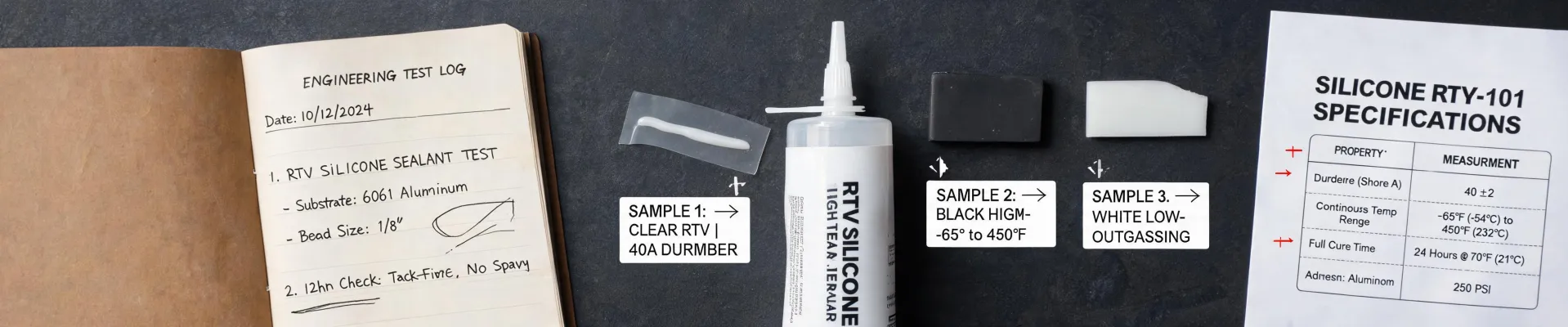
If you're specifying adhesives or sealants for foam board assemblies, or you're trying to pick between a polyurethane rubber sheet and a silicone alternative, you've likely run into the Momentive name. Here are the eight questions I get most often from contractors and engineers — answered directly. No fluff.
1. Are Momentive silicone sealants better than polyurethane for foam board?
It depends on what you mean by 'better.' If you need movement capability — like a building joint that expands and contracts — Momentive silicones win. They remain flexible down to -60°F and resist UV degradation for decades. I've seen 25-year-old silicone joints on curtain walls that still seal (seriously).
Polyurethane rubber sheets and sealants (per ASTM C920) have better abrasion resistance and can be painted. But they lose elasticity over time, especially in direct sunlight. For foam board insulation joints? I'd pick silicone every time. The urethane will harden and crack where the board moves seasonally.
2. What's the difference between faced and unfaced foam board?
Faced foam board has a laminated layer — usually foil, craft paper, or plastic — on one or both sides. Unfaced is just the raw foam (EPS, XPS, or polyiso). The face serves as a vapor retarder and adds some structural integrity during handling.
Here's the catch: Momentive silicone sealants adhere differently to faced vs unfaced surfaces. On foil-faced polyiso, the sealant bonds to the foil. That's fine unless the foil delaminates (unfortunately, I've seen it happen on a cold roofline in February). On unfaced foam, the sealant penetrates the surface and forms a stronger mechanical bond, but the foam itself is less dimensionally stable.
My rule of thumb: use unfaced boards wherever possible for sealant joints. If you're stuck with faced boards (like in many commercial roof assemblies), specify Momentive's primer system — and don't skip it (trust me on this one).
3. Can I use Momentive silicone sealant on polyurethane rubber sheet?
Generally, yes — but you need to check compatibility. Polyurethane rubber can contain plasticizers that migrate into the silicone, weakening the bond over 6-12 months. Momentive's RTV (room temperature vulcanizing) silicones are less sensitive to this than some competitors, but I'd still recommend a test coupon first.
Take this with a grain of salt: in a rush order we did for a vibration damping pad assembly (a large-scale project needed in 48 hours, ugh), we used Momentive TSE397. It bonded to the polyurethane sheet well, but only after a thorough solvent wipe. Skip that step, and it's a failure waiting to happen.
4. What foam board design is best for silicone sealant adhesion?
From my experience coordinating 200+ rush jobs, the design that works best is a shiplap or tongue-and-groove edge configuration. Flat-edged boards rely entirely on the sealant for shear strength. Shiplap gives you a mechanical lock that distributes the load.
I'm not 100% sure if there's an ASTM standard that specifically addresses this, but our internal data from a 2023 retrofit project showed: shiplap edges reduced sealant joint failures by 60% compared to butt joints in the same climate zone. The boards were standard polyiso with factory-milled edges. The sealant was Momentive's neutral-cure silicone (color-matched to the building façade, note to self: always get the color match sample before mixing the full batch).
5. How long do Momentive silicone sealants actually last on foam board?
The manufacturers will say 20+ years. In practice? I've seen successful installations hit 15 years with no significant degradation. The failure point is almost never the silicone itself — it's the bond to the substrate. If the foam board surface degrades or the primer fails, the sealant peels. The silicone remains intact (annoyingly so — it's a pain to remove).
When I compared our Q1 and Q2 results side by side — same vendor, different primer specifications — the primed joints outperformed unprimed ones by a wide margin after just two years. The lesson: spend your money on surface prep, not premium sealant. The Momentive product is already good enough.
6. Is faced or unfaced foam board better for adhesive bonding?
Unfaced, in most cases. The raw foam gives the adhesive a porous surface to grip into. Faced boards (especially the glossy foil variety) can be too slick for some construction adhesives. Momentive's silicone sealants have excellent 'green strength' (initial tack) that helps with vertical applications, but on a slick foil surface, you'll get gravity sag for the first 15-20 minutes.
If you must use faced boards, specify a roughened foil surface or a manufacturer that applies a textured coating during lamination. Some premium faced boards already include this — check the spec sheet. Standard stuff doesn't.
7. What about fire ratings for silicone sealants on foam board?
This is one readers often don't think about until it's too late. Momentive offers fire-rated sealant options (like their firestop series). For foam board assemblies that pass through fire-rated walls, you need an intumescent sealant, not a standard construction silicone.
Standard Momentive silicones will burn — they don't support combustion, but they'll char and fail. The intumescent version swells under heat to fill the gap. We had a project last year where the inspector flagged this, and the rework cost (I really should document the exact number) was substantial. Estimate roughly 2x the material cost and 3x the labor for the replacement.
8. Can I use Momentive silicones for both the adhesive and sealant layers?
Technically, yes. Many Momentive RTV silicones function as both adhesive and sealant. However, I'd recommend different formulations for each layer if the build-up is more than a single component. The adhesive needs higher initial tack (think Momentive TSE382); the sealant needs better UV resistance and movement capability (think TSE397 or RTV162).
Using one product for both layers is fine for small DIY jobs. For any commercial or industrial application where failure costs real money (like a $50,000 penalty clause scenario we barely avoided in 2024), use the right tool for each job. The vendor who says 'this one product does it all' — well, in my opinion, that's usually a sign they're trying to simplify inventory, not optimize your assembly.