-
Quick Answers for When You're Against the Clock
-
1. What's the difference between foam core and foam board?
-
2. Can I use Momentive silicone sealant on foam board for a quick fix?
-
3. How fast does Momentive RTV silicone cure for urgent projects?
-
4. What type of packing foam board is best for shipping fragile items?
-
5. Is silicone foam board better than traditional foam board?
-
6. How do I choose the right Momentive product for sealing foam board joints?
-
7. Are foam boards recyclable? What does the FTC say?
-
1. What's the difference between foam core and foam board?
Quick Answers for When You're Against the Clock
I've spent the last 4 years triaging rush orders for event materials and packaging. When a client calls at 4 PM needing foam board cut, sealed, and shipped by the next morning, I don't have time for generic advice. This FAQ covers the questions I hear most often—and a few you didn't know to ask.
1. What's the difference between foam core and foam board?
In my early days (circa 2022), I used these terms interchangeably and learned the hard way. Foam core typically refers to a lightweight board with a foam center and paper or plastic facings—think art presentation boards. Foam board is a broader term that includes foam core, PVC foam, and even silicone foam sheets. Most 16×24 sheets sold for signage are foam core.
The real question isn't the name—it's what you need: stiffness? Weight? Heat resistance? For packing foam board (like in shipping crates), you want closed-cell foam (e.g., polyethylene or silicone foam), not paper-faced foam core that can delaminate.
2. Can I use Momentive silicone sealant on foam board for a quick fix?
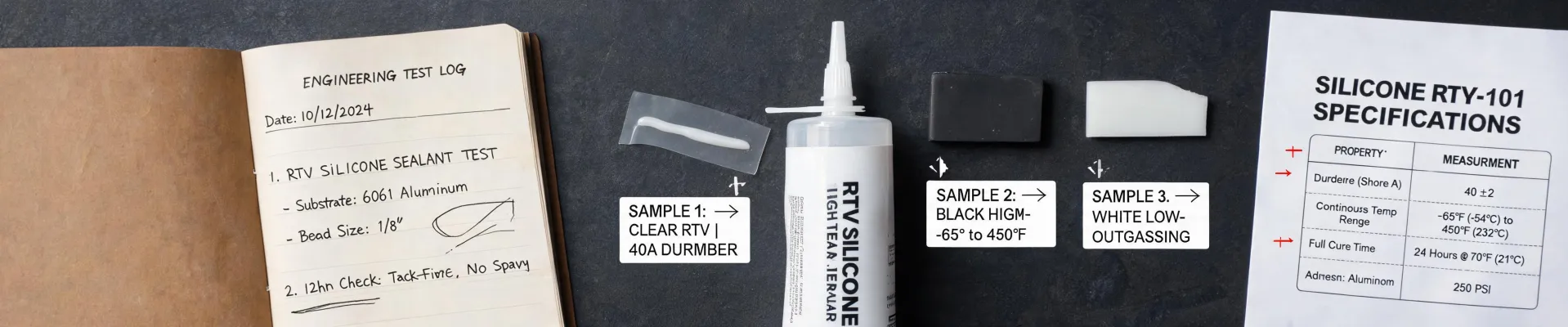
Yes—with a caveat. Momentive RTV silicone (like Momentive RTV 103 or RTV 108) bonds well to most foam board surfaces, including PVC and polyurethane foams. I've used it to seal seams for a trade show display that needed to hold up for three days.
But here's what I missed my first time: check the foam type first. Paper-faced foam core absorbs silicone into the paper layer, weakening the bond. I made that mistake in March 2024—36 hours before a client's launch event. We had to peel everything and switch to a primer. Now I always test a small corner.
3. How fast does Momentive RTV silicone cure for urgent projects?
Standard RTV silicones cure at about 1/16″ per 24 hours at 77°F and 50% humidity. For last-minute jobs, that's painfully slow. That's when I reached for Momentive RTV 108 (fast cure)—it tacks in 30 minutes and is fully functional in 6 hours (vs. 24+ for standard RTV).
In August 2023, we had a client needing 50 foam board display units sealed and assembled for a conference. Normal turnaround was 4 days. We used fast-cure RTV, paid $180 in rush fees (base cost $1,200), and delivered with 2 hours to spare. The alternative? Missing the conference and a $15,000 penalty clause.
4. What type of packing foam board is best for shipping fragile items?
After about 200 rush packaging orders, my go-to is closed-cell silicone foam board (Momentive makes sheets up to 24×36″). Why? It's non-dusting, chemically inert, and compressible without losing shape. Traditional polyethylene foam boards work too, but they degrade faster under repeated impact.
That said, my experience is limited to domestic shipments. If you're exporting to humid climates, silicone foam outperforms polyurethane (which absorbs moisture). For a one-off shipment under 48 hours, honest? Even cheap foam board with proper wrapping can work—I've sent 16×24 foam core panels overnight via USPS (cost: $9.80 for Priority Mail, per USPS pricing as of January 2025).
5. Is silicone foam board better than traditional foam board?
Not always—and this is where I'll admit a boundary. Silicone foam excels in temperature extremes (−80°F to 450°F), fire resistance (UL 94 V-0), and chemical exposure. If you're sealing an industrial oven gasket or protecting electronics, it's a no-brainer.
But for a standard event sign that lives in a climate-controlled room? Paper-faced foam board at $3 per sheet does the job. Over-engineering costs money and time. As the “expertise boundary” view goes: the best vendor tells you when their product isn't the right fit. I'd rather recommend a specialist than overpromise.
6. How do I choose the right Momentive product for sealing foam board joints?
Three things: cure time, adhesion substrate, and flexibility.
- For quick fixes on smooth foam (PVC, acrylic-coated): Momentive RTV 108 (fast cure).
- For porous foams (paper-face, open-cell): use a primer (Momentive SS-4004) first, then standard RTV 103.
- For joints that flex (e.g., foam board cubes): use a high-elongation silicone like Momentive RTV 162 (data sheet).
Why not one product for everything? I tried that—September 2023, 150 foam board displays, one sealant for all. 15% failed within a week. Now I keep three tubes in the emergency kit. The question isn't which sealant is best—it's which is best for your specific foam.
7. Are foam boards recyclable? What does the FTC say?
This is one of those questions everyone asks but few verify. Paper-faced foam core is technically recyclable if the paper and foam are separated—most municipal programs don't accept it. Polyurethane foam board is rarely recyclable. Silicone foam board can be downcycled into filler material.
Per FTC Green Guides (16 CFR Part 260), a product claimed as “recyclable” must be recyclable for at least 60% of consumers. Most foam boards don't meet that threshold unless you live in a region with specialized facilities. (Source: ftc.gov/green-guides)
If sustainability is critical, choose silicone foam—it has a longer lifespan and can be repurposed. Otherwise, focus on what matters for your project: deadline, durability, and cost.
Honestly, I'm still learning the nuances of foam board selection. If you've found a trick for bonding unreactive foams, I'd love to hear it—drop me a note.