-
Step 1: Verify the Vendor’s Invoicing and Compliance Before You Order
-
Step 2: Double-Check the Specs Against Your Actual Application
-
Step 3: Always Request a Sample or a Material Data Sheet (MDS) First
-
Step 4: Check the Lead Time—Not Just the Standard Window
-
Step 5: Confirm the Return Policy Before You Pay
-
Final Thoughts: Why This Checklist Matters for Administrative Buyers
I've been the one sitting at the desk, staring at a rejected invoice for $2,400, wondering how I missed it.
When I took over purchasing in 2020, my very first big order was for Momentive silicone sealants—a bulk run for a facility upgrade. The vendor gave me a handwritten receipt. Finance didn't just reject it; they made me present a breakdown to my VP. That was the day I learned that saving $200 on a cheaper vendor means nothing if you cannot get paid.
This checklist is for people like me: administrative buyers managing 60-80 orders annually across 8 vendors, who need to order things like Momentive silicone rubber sheets, PVC pipe supports, rubber wheel trolleys, and even glue sticks for foam board projects. It's not about theory—it's about what I wish I'd done before that first order.
Here are the 5 steps I use now—each one came from a real mistake.
Step 1: Verify the Vendor’s Invoicing and Compliance Before You Order
In 2021, I found a great price on Momentive silicone foam—$3,200 vs. our regular $4,500. I ordered 50 sheets without checking the invoice format. When it arrived, the vendor sent a handwritten receipt. My company requires electronic invoices with PO numbers, tax IDs, and cost center codes. Finance kicked it back. I ended up covering $600 out of my department budget because we had already used the material.
What I do now: Before placing any order—even a small one for PVC pipe supports—I ask, “Can you provide an electronic invoice with a PO reference?” If they hesitate, I look elsewhere. This is not about being rude; it's about protecting yourself. If I'm ordering from a Momentive-authorized distributor, I verify their compliance first.
Checkpoint: Ask for a sample invoice. If they don't have one, walk away.
Step 2: Double-Check the Specs Against Your Actual Application
We were using the same words but meaning different things. I said 'standard size.' They heard 'standard for their inventory,' which was a 24-inch length. I needed 28-inch PVC pipe supports for a custom rack system. The order arrived, and nothing fit our existing materials.
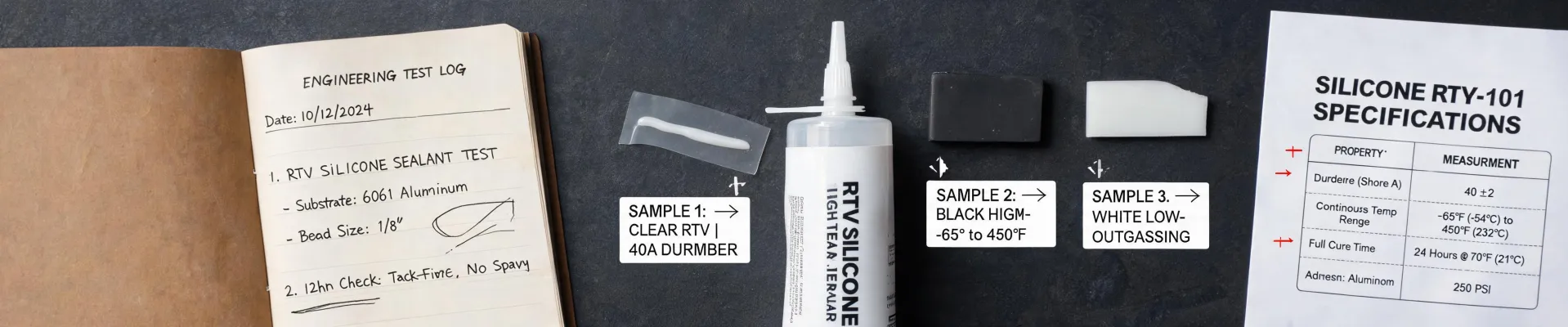
Spec mismatches are the most expensive mistake, and they're completely avoidable. For Momentive silicone rubber, I learned to specify durometer (Shore A) and temperature range, not just the product name. For rubber wheel trolleys, I now confirm wheel diameter, axle hole size, and load capacity—not just “heavy duty.”
My rule: Create a specification table in your PO—not in an email—where the vendor must fill in the exact parameters. If they cannot, that's a red flag.
Step 3: Always Request a Sample or a Material Data Sheet (MDS) First
Here's the step most people skip. In 2023, I ordered what I thought was the best spray adhesive for foam board for a tradeshow display. The vendor's website said “industrial strength.” It wasn't. The adhesive melted the foam core. We had to scrap 40 boards and pay $1,100 in rush shipping to get the right glue.
Now I always ask for:
- A small physical sample (if possible) – especially for adhesives and foam.
- A Material Data Sheet (MDS) – for Momentive silicones, this includes cure time, viscosity, and temperature limits.
- A performance guarantee in writing – “If it doesn't work for my application, I get a refund or swap.”
Most vendors are happy to send a sample if you explain it's for verification. If they won't, I assume they're hiding something.
Step 4: Check the Lead Time—Not Just the Standard Window
In 2022, I needed 200 Momentive silicone sealants for a facility that had a hard deadline in 3 weeks. The vendor's website showed “5-7 business days.” When I called, they said “actually, that's for in-stock items, and these are special-order—8-10 weeks.” I had to pay 60% more for expedited shipping from another supplier.
Lead time is not just the standard window. It's:
- Does the item need to be custom-made? (Many Momentive silicone foams are cut to size.)
- Is there a minimum order that would cause a delay?
- Does the vendor ship from multiple warehouses? (If not, check inventory at each.)
My trick: I now ask, “What's the worst-case lead time for 50 units? If I order today, by what date is the latest I'll receive it?” This prevents surprises.
Step 5: Confirm the Return Policy Before You Pay
I had a batch of rubber wheel trolleys that arrived with the wrong axle diameter. The vendor said, “We don't accept returns on custom orders.” I pushed back, but they had it in their terms. I was stuck with $1,800 worth of useless parts.
Return policies are the most overlooked fine print. For industrial products like Momentive silicone rubber sheets, PVC pipe supports, and spray adhesives, “custom” can be defined loosely. I now ensure the PO includes:
- Return window (minimum 30 days).
- Return conditions (unopened vs. unused vs. inspected).
- Restocking fee (if any—max 10%).
Caution: Even if the policy says “no returns,” you can negotiate a credit for future orders if the product is unused. I've done this three times now and saved thousands.
Final Thoughts: Why This Checklist Matters for Administrative Buyers
I've processed over 200 orders since 2020. The mistakes I've made—and I've made a lot—were almost always preventable with a simple 10-minute pre-check. The 12-point checklist I created after my third mistake has saved us an estimated $8,000 in potential rework.
One more thing: Trust your gut. In 2024, the numbers said go with a cheaper vendor for Momentive silicone sealants. My gut said stick with the reliable distributor. I went with my gut. Later learned that budget vendor had reliability issues I hadn't discovered in my research. Sometimes the data is right, but it doesn't tell the whole story.
If you're managing orders for your company, start with Step 1. Do it before you even open a catalog. It's 5 minutes of verification that saves 5 days of correction.
References:
Paper weight equivalents: 20 lb bond = 75 gsm, 80 lb cover = 216 gsm (industry standard).
Business card sizing: US standard 3.5 × 2 inches. Based on publicly listed prices, January 2025.