The Order That Changed How I Buy
I manage purchasing for a 200-person company. That means 60 to 80 orders a year, 8 vendor relationships to maintain, and a budget that gets scrutinized by both operations and finance. Most of my job is quiet, boring, and exactly how I like it.
March 2023 was not boring.
We needed 40 sheets of foam board for an industry event display. A new vendor quoted 30% below our usual supplier, and I jumped at the savings. The boards arrived on time. They looked fine. Then the team started cutting, and everything fell apart.
The surface tore under the blade. The edges crumbled instead of cutting clean. The sheets flexed when they needed to stand rigid. Two days of rework. Three hours of event-setup delay. And one very uncomfortable mention in my weekly report.
I blamed the cutting team. Then I blamed the printer. Then I finally did what I should have done before ordering: I read the material spec.
The culprit wasn't the cutting. It was the material. I'd ordered flexible EVA foam for a rigid display application. The wrong foam, for the wrong job, at a "great" price.
The Real Problem: Foam Is a Category, Not a Product
Here's the trap I fell into: the term "foam board" sounds like one thing. It's not. It's a category holding materials with wildly different properties.
EVA foam is soft, flexible, and cheap. The global EVA foam market sits at roughly $3 billion (Source: Grand View Research, 2024). It dominates packaging, padding, craft mats, and kids' products. And it's the wrong material for a rigid, printed display panel. It flexes, tears, and holds ink poorly.
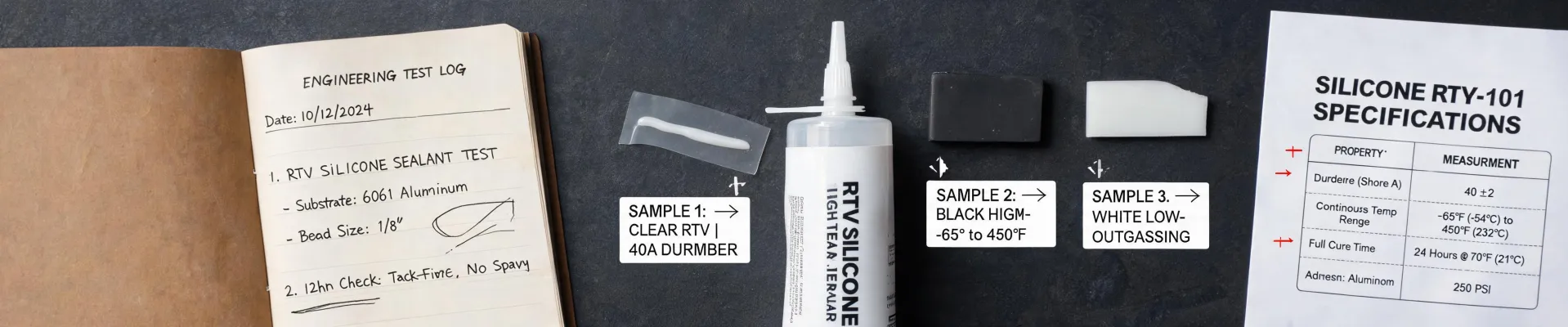
Silicone foam is a different species. It's temperature-resistant—many formulations handle -60°C to 200°C continuous duty. It's compressible but springy, meaning it seals and recovers, which makes it the go-to for gaskets, thermal insulation, and high-heat sealing jobs. I first landed on Momentive's official website while researching why my sealants kept failing in the field, and their silicone foam datasheets were an eye-opener: temperature ranges, compression set, tensile strength, all published and easy to verify.
Rigid PU or PVC foam board is what I should have ordered: dense, printable, stiff enough to stand upright, and designed for exactly the display application we needed.
The deeper problem behind my failure—and behind most material-purchasing failures I've seen in five years of this job—is that we search by product name instead of by application requirement. I typed "foam board" into a search engine and filtered by price. I should have typed "rigid printable sheet for display graphics, 5mm thickness" and filtered by spec.
The same pattern showed up in our facilities team. A maintenance tech ordered a general-purpose sealant for the air hoses on our compressors. Three weeks later, it liquefied under heat and made a spectacular mess. The issue wasn't the brand. It was that nobody specified "high-temperature silicone sealant rated for continuous 150°C duty." That kind of product exists, but you'd never find it by searching "air hose sealant" and picking the cheapest result.
This is the pattern I see everywhere: people blame the blade, the tool, or the team, when the material was wrong from the start.
What the Wrong Material Actually Costs
Let me put real numbers on the March 2023 disaster:
- 40 sheets of "cheap" EVA foam: $1,240
- Rush reprint of event graphics: $480
- Weekend overtime for two team members: $1,100
That's $2,820 in direct costs—and roughly $3,700 once you factor in the three-hour setup delay, the client watching a rushed install, and the dent in my credibility with operations. The unit price was 30% lower. The total cost of ownership was in a completely different universe.
Five minutes of verification is cheaper than five days of rework. Every single time.
Our facilities team learned the same lesson with the failed sealant. The general-purpose tube cost $14. The properly rated high-temperature silicone replacement cost $32. But the downtime plus the emergency maintenance call ran past $800. The $18 difference was the cheapest insurance they never bought.
The 10-Minute Checklist That Prevents It
I'm not a materials engineer. I'm an administrator who orders a lot of stuff and has been burned enough to build a process. Here's the checklist I now run for every material order:
- Write down three things the material must do. Temperature range? Rigidity? Moisture exposure? If you can't list three requirements, you're not ready to order.
- Search by requirement, not product name. Don't search "eva foam market" or "foam board price." Search for the application: "rigid printable sheet for display graphics." Different keywords lead to different products.
- Pull the official spec sheet. For silicone foam and sealants, I go straight to the manufacturer. Momentive's official website publishes datasheets with temperature ratings, compression set, and tensile strength. If a supplier can't point to a verifiable spec sheet, I don't order.
- Cut one test piece before committing. The best way to cut foam board—and the best way to confirm you have the right foam board—is to test a single piece. Sharp blade, straightedge, clean cutting surface. If the edge crumbles, stop. Don't blame the blade. Blame the material and verify the spec.
There's a genuine satisfaction in getting this right. When the displays stand up, when the sealants hold, when the procurement review has nothing awkward to discuss—that's the payoff. It doesn't come from being smarter. It comes from five minutes of checking before ordering instead of five days of fixing after.
I still kick myself for that March 2023 order. But the checklist has saved me more times than I can count since. Prevention is invisible when it works and painfully obvious when it doesn't.