-
“Just get me some Momentive RTV silicone” is the first red flag
-
Before you buy Momentive silicone rubber, name the rubber base
-
A long foam board and the question: does foam board absorb sound?
-
How much a wrong spec costs when the clock is short
-
The cheapest fix: specify the conditions before the emergency starts
At 3:07 p.m. on a Thursday, the call came in. I can’t promise it was exactly 3:07, but the opening sentence I remember well: “We need Momentive RTV silicone on site by Monday. High temp. Black. Can you get it here?”
If you’ve ever made a call like that, I’m not annoyed. I coordinate emergency material requests for a specialty rubber and silicone supplier. Over the last five years, I’ve processed more than 200 rush orders—some with same-day turnarounds, some with freight charges that cost more than the material itself. The stress doesn’t bother me. What bothers me is how often the real problem isn’t delivery.
The delivery date is almost never the real problem.
“Just get me some Momentive RTV silicone” is the first red flag
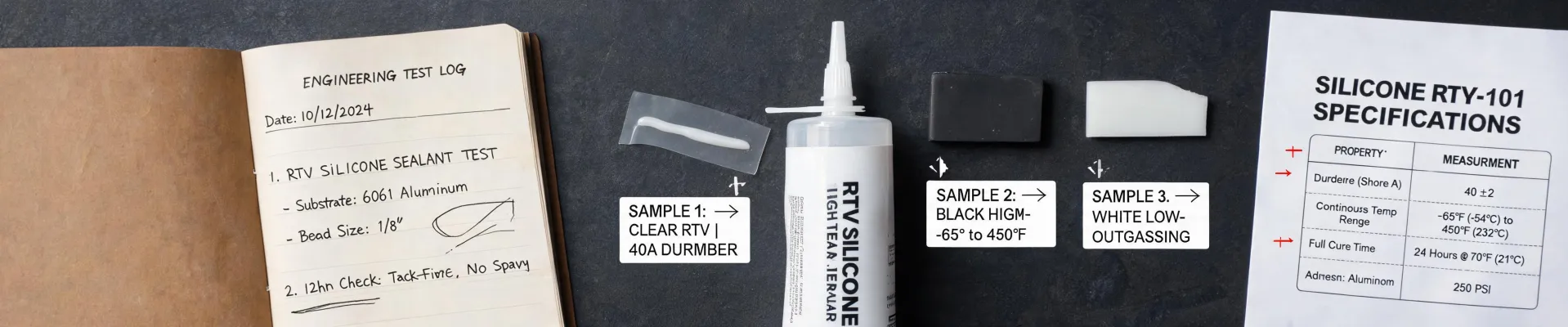
Momentive RTV silicone is a family of products, not a single item. “RTV” means room-temperature vulcanizing. That tells me the material can cure in place at ambient conditions, and that’s a helpful starting point. But it doesn’t tell me what I actually need to know.
Will the material touch oil or solvents? Is it bonding to bare aluminum or painted metal? What hardness should the cured seal be? Does the application require a certain flame rating? Does the gap need to be sealed quickly, or does it need enough working time for a large part? A genuine Momentive RTV silicone can check every box on your purchase order and still be the wrong pick if those questions haven’t been answered.
I’ve sent a real product from a valid datasheet family and watched it fail because nobody asked what substrate it had to bond with. The surprise wasn’t the quality of the material. The surprise was how easy it is to overlook the simple variable when time pressure gets loud.
That’s not a sales pitch for more paperwork. It’s a warning that “just send me RTV” can turn a small sealing job into a same-week mistake.
Before you buy Momentive silicone rubber, name the rubber base
The second thing I need to know is the rubber base. Not because I like difficult questions, but because “rubber” doesn’t mean anything until you know what base polymer is under it.
EPDM is a rubber base. Nitrile is a rubber base. Neoprene is a rubber base. Silicone is a rubber base. Each changes the way a seal behaves. When someone asks for Momentive silicone rubber, they’ve at least made the silicone decision. That’s good. But Momentive silicone rubber still covers many different product types.
RTV silicone is useful for sealing and formed-in-place gaskets. It comes in a cartridge or pail and cures after application. But RTV is not always the best answer for a repetitive molded part. A heat-cured silicone rubber compound or a fabricated sheet could be more consistent, stronger, and faster to install. They’re all silicone rubber. They’re not all interchangeable.
So when I hear a phrase like “we need rubber base,” I start from the same place every time: rubber base made of what? If you know that, we can find the right grade. If you don’t, no freight option in the world will fix it.
A long foam board and the question: does foam board absorb sound?
Here’s a question that landed in my inbox in February 2025. Someone was designing an enclosure and planned to place a long foam board inside it. Then they stopped and asked the right question: does foam board absorb sound?
The short answer is: it depends, but common rigid foam board is often not what people think it is. Polystyrene foam board is mostly closed-cell. Sound waves hit the surface and bounce off rather than entering a network of open pores. Absorption needs open pores to turn sound energy into heat. So no, a long foam board is usually not a substitute for an acoustic absorber.
The deeper problem is that “long foam board” defines a shape, not a function. The person who asked that question had already bought material based on a visual idea. Acoustic materials, like silicone materials, need to be chosen by behavior, not by appearance. If you’re trying to reduce echo inside a case, you need an absorber. If you’re trying to keep sound from leaking through a seam, you need a gasket or seal that closes the air path. Those are different solutions.
I see this same pattern in silicone rush orders. Someone asks for “Momentive RTV silicone” or “Momentive silicone rubber” without naming the function. In my world, a soft silicone rubber gasket can stop sound from leaking around a door seal. In the same enclosure, a rigid foam board will not absorb much sound if it’s closed-cell. Neither decision should be made at the last minute.
How much a wrong spec costs when the clock is short
Let me give you an example. In March 2024, a customer needed a sheet of silicone rubber for a prototype test with about 36 hours to spare. We found stock, arranged freight, and told them the sheet would arrive on time. It did. But we shipped the material before confirming the hardness the test fixture needed. My cost spreadsheet said ship it now. My gut said ask one more question. I listened to the spreadsheet because the freight cutoff was minutes away. It was a mistake.
The material was real. It came from the right silicone rubber family. But it was too hard for the application, so a second sheet had to be cut and shipped. I want to say the extra freight was around $2,400, but don’t quote me on that number. The larger cost was the lost time and the quiet tension between the engineers who had to redo their test plan.
The lesson wasn’t “don’t rush.” Sometimes rushing is legitimate. The lesson was that a one-word specification—silicone—was never enough to begin with.
The cheapest fix: specify the conditions before the emergency starts
Most rush orders don’t need a 50-page material specification. They need a few useful details:
- The material family. Silicone, EPDM, nitrile, neoprene, or something else. If it’s silicone, is it RTV, heat-cured rubber, or a fabricated sheet?
- The operating environment. What will the material contact? What temperature, chemicals, fluids, UV, or weather will it see? This one line eliminates more bad choices than any other.
- The critical physical property. Hardness, thickness, compression, elongation, or tear resistance. You don’t need every number. You need the number that the failure will punish.
- Certifications and documentation. If you need a datasheet, lot traceability, UL listing, food-contact letter, or similar documentation, ask before you’re in a rush. Documentation requests can’t be fixed by overnight freight.
- The function, especially for sound or sealing. Are you trying to stop an air leak, absorb echo, block sound, or damp vibration? The answer will point you to a different product.
I promise, this doesn’t slow things down as much as you’d think. A clear request takes two minutes to write and often produces a quote in minutes. A vague request can take hours to sort out.
Five minutes of verification beats five days of correction. That phrase sounds simple, but it’s the entire difference between the customers I see once and the callers I see every month. The real fix isn’t a faster emergency lane. It’s a better product description before the lane is needed.