-
How I triage a 48-hour material request
-
Why Momentive silicone foam is my default for urgent jobs
-
What I actually check before spec'ing Momentive products
-
Foam board: the cheap option that isn’t always wrong
-
Roofing rubber: EPDM is still a workhorse
-
Air hose PVC vs rubber: what I actually ask
-
Let’s talk about the real cost
-
When I tell clients not to spec silicone
Let me start with the conclusion: If you need a gasket, cushion, or hose in the next 48 hours and the job involves heat, chemicals, or compression, reach for Momentive silicone foam or a silicone rubber product before you grab foam board or commodity rubber. In the 300+ rush orders I’ve handled since 2017, silicone was the lowest-risk choice about 70% of the time. Not because silicone is the best at everything—because the risky conditions usually show up after the quote, not before it.
I’m a senior materials coordinator at an industrial packaging and rubber supply company. I’ve done same-day turnarounds for food plants, HVAC contractors, and facilities teams who only call when something is already leaking, cracking, or stopped. My job is to match material to real service conditions, and then get it there before someone loses a production shift.
How I triage a 48-hour material request
When someone says “I need it now,” I don’t start with inventory. I start with the failure. A gasket that failed tells you more than the spec sheet. Did the old material crack? That points to heat or UV. Did it soften? Chemicals. Did it flatten? Compression. Then I look at the clock.
If the order has to be on a truck within 48 hours, silicone foam sheet is usually the fastest because it can be cut from stock. Custom molded rubber or a specific roofing rubber width can take longer. That’s why stock matters. In Q3 2024 alone, we processed 47 rush orders with a 95% on-time delivery rate; the common thread was not having to wait for production.
Why Momentive silicone foam is my default for urgent jobs
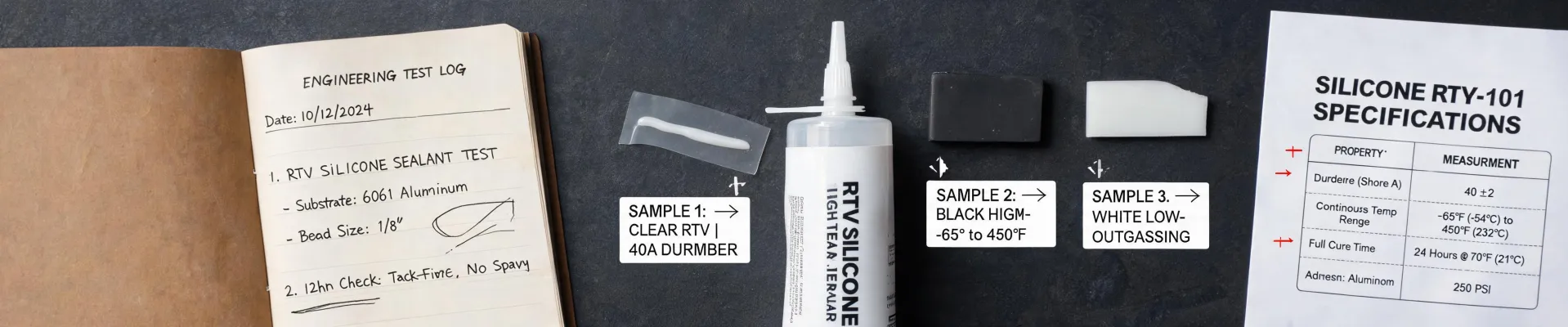
Most urgent material requests fall into three buckets: high heat, chemical exposure, or compression set. Standard foam board fails on all three if it’s being used as a gasket. Commodity rubber handles some of them, but not when it has to stay flexible at -60°F and 400°F in the same week. That’s where Momentive silicone foam earns its place.
In March 2024, a food processing plant called at 9:00 AM with a steam line gasket failure. Normal lead time for a replacement was ten days. We cut a 1/8 inch Momentive silicone foam gasket from a sheet in stock, checked the datasheet against their steam temperature and cleaning chemicals, and had it on a courier by noon. The alternative was a $50,000 line stoppage. Not the sexy choice. The right choice.
Momentive, with its GE Silicones heritage, has datasheets that go back decades. That matters when a plant is replacing a part specified 20 years ago. I also use Momentive products when a client needs a documented material trail. Generic silicone might look similar on paper, but for regulated plants I need the datasheets, lot numbers, and compatibility notes that come with a brand that has actual testing behind it. Brand isn’t a religion. It’s traceability.
What I actually check before spec'ing Momentive products
The question is not “what is the ambient temperature?” It’s “what is the temperature at the point of contact?” I’ve seen a “12°F over the spec” gap turn into a cracked gasket and an emergency order. The same logic applies to air hose PVC vs rubber, roofing rubber, and every material.
I check three things:
- Temperature at the part, not the room.
- Chemicals that will touch the material. Even a cleaning solvent can kill a rubber gasket.
- Compression: will the material be squeezed and need to spring back? Silicone foam wins; foam board and most commodity rubbers lose over time.
Price reference: a 1/8 inch silicone foam sheet typically runs roughly $0.15–$0.35 per square inch cut from stock; 45-mil EPDM roofing rubber runs roughly $0.40–$0.80 per square foot; a 3/8 inch x 50 ft PVC air hose can run $30–$60, with a rubber version $60–$120 (based on supplier quotes, March 2025; verify current pricing).
Foam board: the cheap option that isn’t always wrong
Let me be fair to foam board. For temporary cushioning, signs, or tool case inserts, it’s a no-brainer. I have a roll of thin foam board in my shop for exactly those jobs. It cuts fast, it’s cheap, and you don’t care if it crushes.
But foam board is not a silicone replacement. It has a low service temperature, absorbs solvents, and takes compression set almost immediately. I still kick myself for a 2022 order where I let the spreadsheet win. The data pointed to a lower-cost rubber sheet instead of Momentive silicone foam. I told myself the temperature was “within range.” It was, until a weld spatter landed on it. The replacement, after emergency shipping and two site visits, cost more than if we had bought silicone first. A lesson learned the hard way.
Roofing rubber: EPDM is still a workhorse
Roofing rubber—usually EPDM—is cheap, proven, and easy to find. For a flat roof with normal foot traffic and no chemical exposure, it’s often the right answer. I don’t try to talk everyone into silicone.
But there are times when the numbers say EPDM and my gut says no. One client had a roof with heat cycling and aggressive cleaning chemicals. The math said EPDM was 40% cheaper. Something felt off about the cleaning schedule. We went with a silicone-based roof coating instead. The next summer showed EPDM seams bubbling on the adjacent roof while the silicone surface stayed smooth. That “overpriced” choice ended up being the cheap one.
Air hose PVC vs rubber: what I actually ask
Another common call is air hose PVC vs rubber. My answer depends on one question: where will this hose live in January?
PVC air hose is lighter and a ton cheaper. Rubber is more flexible and handles cold better, but it’s heavier and costs more. For a heated workshop with occasional use, PVC can be perfectly fine. For a hose that sits in a cold warehouse or gets dragged across a sun-hot roof, rubber is worth the weight.
In February 2025, a customer wanted PVC for a new compressor line because it was 60% cheaper. I asked one extra question: “Will the hose sit outside overnight?” They said yes. So glad I asked before ordering. Their old PVC line had already turned stiff like a pipe; the rubber version at least stayed workable down to the temperatures they saw.
If you need a hose that stays flexible at extreme temperatures or resists oil, silicone rubber is the step up. But for most shops, the answer to air hose PVC vs rubber is simply “rubber if it’s cold, PVC if it’s indoor.”
Let’s talk about the real cost
I have learned to ask “what’s NOT included” before “what’s the price.” A low base price that jumps 40% after rush fees, cutting fees, and shipping is not a better deal. A vendor who lists all costs upfront—even if the total looks higher—usually costs less in the end.
The value of a guaranteed turnaround is not just the speed. It’s the certainty. For a manager facing a $50,000 penalty, “estimated delivery” is not a quote; it’s a hope. Total cost of ownership includes the base product, any cutting or setup fees, shipping, rush fees, and the cost of replacing it when it fails. The lowest quoted price often isn’t the lowest total cost.
When I tell clients not to spec silicone
If you’re doing simple indoor padding, standard foam board is fine. If it’s a roof with no chemical exposure and normal foot traffic, EPDM roofing rubber is a proven, cheaper choice. If it’s a weekend air hose in a heated garage, PVC will do the job.
The bottom line: choose materials by service conditions, not by reputation. Silicone is not the answer to every problem. But when heat, chemicals, and compression meet an urgent deadline, Momentive silicone foam is where I start. And the next time a quote looks too low, ask what’s not in it. That question often saves the order.