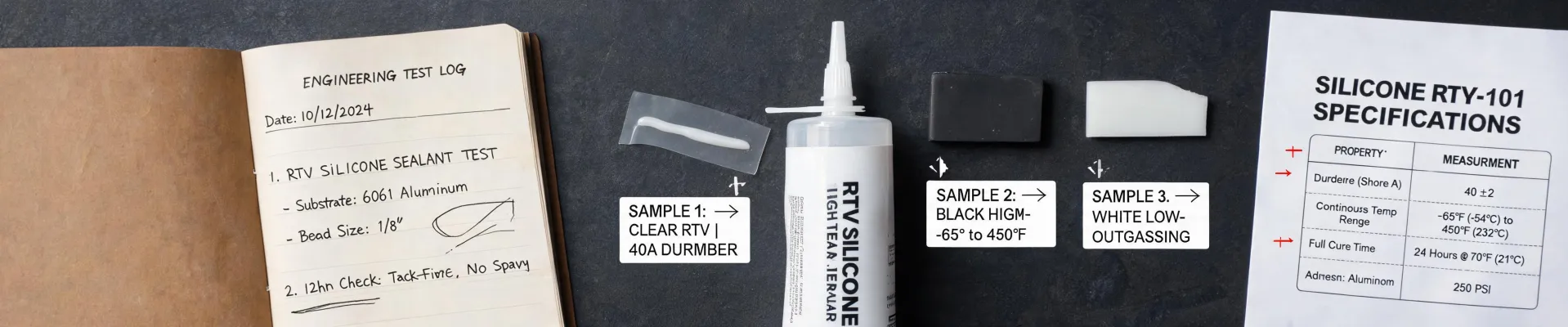
If you have ever had a 3 p.m. call about a project that has to be ready by Monday, you know the feeling. Someone is holding a piece of foam board in one hand and a tube of Momentive silicone sealant in the other, and they are asking the same question: is foam board insulation waterproof? And which one do I actually use?
I have spent most of my career coordinating urgent material requests for industrial clients. In the last five years, I have processed well over 200 rush orders. I have seen silicone used as insulation. I have seen foam board used as waterproofing. Both of those failed. This article is the comparison I wish someone had given me earlier.
What We Are Actually Comparing
Momentive silicone sealant and foam board insulation are not competitors. They are different tools. But when time is short, they end up as an either-or decision, and the choice usually goes wrong.
Let me give you the direct answer first: no, foam board insulation is not waterproof. It can be water-resistant, but that does not make it a waterproof barrier. Momentive silicone sealant, on the other hand, is designed to stop water from moving through joints and gaps. Foam board is designed to slow heat transfer. Different jobs, different materials.
The same silicone chemistry that makes silicone baking mats popular also makes construction sealants. But the formulations are not interchangeable. Baking products need food-grade certification. Construction sealants need weather resistance. Check the spec label before you swap them.
Dimension 1: Waterproofing
If the central issue is water, Momentive silicone sealant wins by a huge margin. A properly applied silicone sealant on a clean, dry surface creates a continuous, flexible barrier. Foam board does not. Expanded polystyrene foam will absorb water. Extruded polystyrene is more resistant, but water still finds a path through seams, cut edges and fastener holes.
In March 2024, I had 36 hours to make a prefabricated equipment enclosure weathertight before an outdoor event. The enclosure had been delivered with the wrong trim and a few exposed seams. We cleaned the edges, applied Momentive silicone around every seam and penetration, and let it cure. A rainstorm hit the morning of the event. No leaks. Foam board never entered that conversation.
To be fair, foam board can be covered with a weather-resistive barrier. But the foam board itself is not the layer that stops water.
One side note: if you landed here because of silicone baking, that is a different specification. Food-grade silicone is tested for high temperatures and repeated food contact. Construction-grade Momentive silicone sealant is not made for food contact. Same polymer family, very different rules.
Dimension 2: Insulation Value
Now flip the problem. If the goal is insulation, foam board wins clearly. Rigid foam boards provide real R-value. XPS typically offers roughly R-5 per inch, while EPS is around R-3.8 to R-4.3 per inch, depending on the product. Silicone sealant provides essentially no insulation. It stops air and water, but it does not reduce thermal conduction in any meaningful way.
I get why people say, 'well, if silicone is already there, why not rely on it?' Because it is not there to insulate. It is there to seal. Think of silicone as the zipper on a jacket and foam board as the jacket itself. The zipper does not keep you warm by itself.
Manufacturer R-value figures come from product datasheets, as of April 2025. Verify the exact product you are using, because values vary by density and thickness.
Dimension 3: Speed Under Pressure
In a rush, both materials can save a deadline. But they buy time in different ways.
Foam board covers large areas fast. You can cut it, fit it, tape it and move on. But it does not stop an active leak. Silicone, applied with a caulking gun, can stop a leak quickly, but it has a cure time. Some Momentive RTV sealants form a skin in minutes but need up to 24 hours for full performance. The delay matters more than people think, especially if you are under a permit clock.
In 2022, we lost a $30,000 contract because we tried to save time by using a quick-set acrylic caulk instead of the silicone spec. It cured fast, cracked during thermal movement, and failed the client's inspection. That is the kind of lesson you do not forget. Since then, we have used Momentive silicone for any joint that needs to flex, and we build a 24-hour buffer into the schedule whenever possible.
The GE Silicones legacy matters here too. Momentive has the technical documentation to back up the name. One call to Momentive support got me the product data sheet I needed in under an hour. I have seen no faster way to resolve a spec question.
Dimension 4: Durability and Repair
This is the dimension that surprises people. Foam board can last for decades inside a wall, but it has little tolerance for movement. If the building shifts, the foam can crack. Silicone stays flexible and handles those micro-movements.
There is also a counterintuitive stack-up issue. I have seen installers place foam board over a freshly sealed silicone joint, thinking they are protecting the silicone. That works only if the foam board is protected from water. If water sits on the face of the foam board or runs behind it through an unsealed edge, the silicone seam is still the only thing saving you. The order of layers matters: silicone is your waterproofing layer. Foam board is your insulation layer. They complement each other, but they cannot replace each other.
Dimension 5: Cost and Failure Risk
Foam board is cheaper upfront. A 4x8 sheet costs less than a failed project. That sounds obvious, but I have watched far too many buyers compare price-per-square-foot and ignore the cost of failure.
If you are doing a temporary repair and need the cheapest option today, foam board and tape might get you out of a meeting. If you are doing something that has to pass inspection or survive weather, silicone sealant is the better insurance. And if you are not sure which silicone to use, the Momentive support team can help you match the product to the substrate. That has saved me more than once.
So Which One Should You Use?
Stop asking which one is better. Ask what the failure mode is.
- If you are sealing a joint where water can enter, use Momentive silicone sealant.
- If you are insulating a large flat surface and keeping it dry, use foam board insulation.
- If you need both, use foam board as the insulation, then seal its edges, seams and penetrations with silicone.
- If you are doing a craft project with pin foam board, remember that it is even less waterproof than the construction-grade version. Keep it indoors and dry.
And yes, the direct answer to the search query: is foam board insulation waterproof? No. Not by itself. There are water-resistant foam products, but a waterproofing membrane or sealant is still required where water pressure or continuous moisture is present.
The fundamentals have not changed. Insulation needs to stay dry. A sealant needs to stay flexible. What has changed is that materials are better than they were ten years ago, and the data side is easier to access. Use it. I have never regretted a 45-minute call to Momentive support when the alternative was guessing on a $50,000 deadline.