-
1. What's the Difference Between Momentive and GE Silicones?
-
2. What Actually Is Momentive Silicone Sealant?
-
3. How Do I Get Momentive Support?
-
4. What's the Best Glue for Rubber to Plastic?
-
5. What Is Rubber Resin, and Do I Need It?
-
6. Can I Use Momentive Silicone Sealant on a Rubber Boat?
-
7. Why Did My Silicone Sealant Fail? (3 Mistakes I've Made)
Let me introduce myself the way my therapist would. I've been specifying adhesives, sealants, and rubber materials for about 8 years. In that time, I've personally made — and, more importantly, documented — 14 significant material-matching mistakes. Add it all up: roughly $5,000 in wasted budget, plus a few weekends I'd rather not revisit. Now I maintain our team's material compatibility checklist, which is my small way of making sure other people don't pay for my education. If you're here because you've got questions about Momentive silicone sealant or you're trying to figure out the best glue for rubber to plastic, you're in the right place. These are the questions I would've asked if I knew then what I know now.
1. What's the Difference Between Momentive and GE Silicones?
A bit of history first, because this tripped me up for too long. GE sold its silicones business in 2006, and it became Momentive Performance Materials. So all those old “GE Silicones” datasheets you see floating around? Same product family, new name. The part numbers were rebranded, but the chemistry didn't change.
I wasted an entire afternoon once tracking down a “GE” part number that had been discontinued under that name. The distributor kept saying “we don't carry GE,” and I kept insisting “but the spec says GE.” Finally, a much older and wiser engineer pointed me to the Momentive equivalent — same manufacturer, same material, different label. That was in 2018. I still kick myself for not just searching “Momentive” first. What was best practice in 2010 isn't always the play in 2025, but the GE-to-Momentive line is very real.
2. What Actually Is Momentive Silicone Sealant?
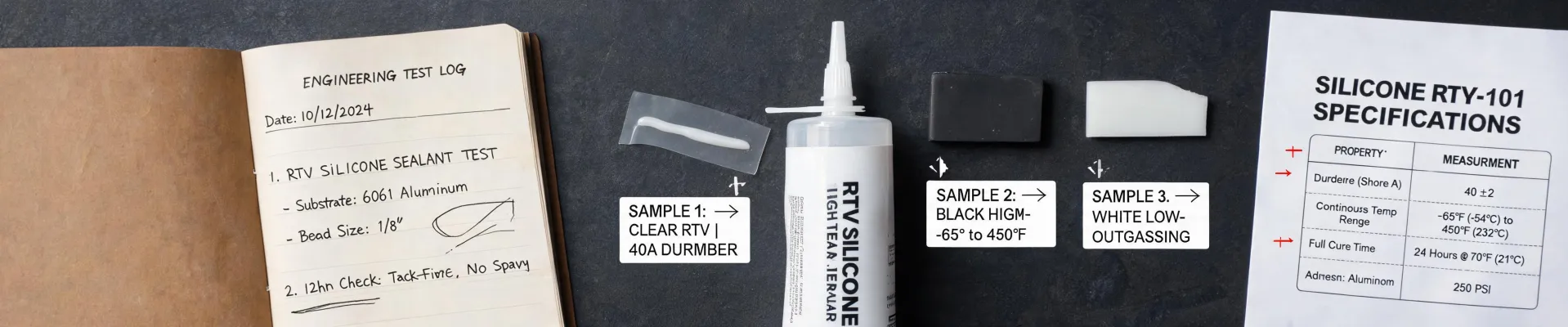
Momentive offers a bunch of silicone products, but “sealant” splits into two main types: RTV (room-temperature vulcanizing) and addition-cure. RTV sealants cure by pulling moisture from the air — that's your standard squeeze-tube experience. Addition-cure silicones are usually two-part systems that cure through a chemical mix. Momentive sells both, across lines like TSE and RTV.
Here's where I messed up. I assumed “silicone sealant” was one universal thing. (Kind of like how “vehicle” covers a minivan and a monster truck.) I ordered 40 tubes of a general-purpose RTV for a job that actually needed high-temperature resistance and vibration damping. The tubes looked identical. The datasheets did not. That $450 mistake taught me the rule I now teach everyone: the product category is a starting point, not a specification.
3. How Do I Get Momentive Support?
Good news: this one isn't hard. The official Momentive website (momentive.com) has a distributor locator, downloadable datasheets, and contact info for technical support. I've called their support line a handful of times over the years, and the people on the other end genuinely know the materials.
But here's the thing — the support experience depends a lot on what you bring to the call. The first time I called, I said “I need help with a silicone sealant” and then spent 15 minutes fumbling through questions I should've already known: product line, cure type, substrate material. I looked like an amateur. My rule now: have the product number, the datasheet, and your application details ready before you dial. And check the SDS (safety data sheet) first. Half the time, the answer you're looking for is already sitting in that document.
4. What's the Best Glue for Rubber to Plastic?
The honest answer is: it depends on the rubber and the plastic. I know, that's the annoying engineer answer, but it's true. Silicone adhesives — including Momentive's — are excellent for bonding cured silicone rubber to plastics like ABS, polycarbonate, or nylon. But they will not form a durable bond on polypropylene or polyethylene. Those are low-surface-energy plastics, and most adhesives can't wet them out without surface treatment (flame, plasma, or a specialty primer).
I learned this the hard way. I was assembling a run of 60 brackets — EPDM rubber pads bonded to polypropylene arms. The upside of skipping the surface energy check was saving maybe 20 minutes of research. The risk was bond failure. I told myself the risk was low — “what are the odds? The tube says it works on rubber and plastic.” Well. Fourteen of the 60 bonds failed within 48 hours. Total cost of that lesson: $890 in rework, plus a rushed weekend to reassemble the batch. General-purpose silicone sealants from Momentive run about $8–15 per cartridge depending on distributor (based on industrial supplier quotes, January 2025; verify current pricing), but the cheapest tube is never the cheapest solution once you factor in labor and rework. Test on your actual materials before committing to a full production run. That's the whole lecture.
5. What Is Rubber Resin, and Do I Need It?
“Rubber resin” is one of those terms that sounds specific but really isn't. It can mean a tackifying resin added to rubber compounds, a thermoplastic elastomer, or a coating ingredient — depending entirely on who's talking.
This caught me off guard when I ordered a “rubber resin” online, thinking it was a primer for silicone adhesion. Nope. It was a processing additive for rubber manufacturing. Completely useless for my application, $200 gone, and the supplier wouldn't take it back because I'd broken the seal. That was the third time a generic material term bit me — and the moment I created our pre-purchase verification checklist. The rule is simple now: no purchase without a technical datasheet confirming the product matches the application. We've caught 47 potential mismatches in the 18 months since. I really should've done this years earlier.
6. Can I Use Momentive Silicone Sealant on a Rubber Boat?
This is one of those “it depends, but be careful” situations. If you're patching an inflatable boat — the kind made of PVC or Hypalon — standard silicone sealant is not the right tool. Those fabrics flex constantly, and silicone won't bond reliably or hold up to the movement. You want an adhesive specifically made for inflatable boat repair, like a two-part PVC or Hypalon adhesive.
What Momentive silicones are genuinely great for on any boat is sealing hardware: through-hull fittings, hatches, deck fixtures. I sealed a deck fitting on a friend's fishing boat with a Momentive RTV silicone, and it's still watertight two seasons later. And no, I didn't skip the datasheet that time — I'd already paid for that lesson. The sheet confirmed the product was rated for marine-grade aluminum. It pays to spend three minutes reading. (I know I sound like a broken record. That's the point.)
7. Why Did My Silicone Sealant Fail? (3 Mistakes I've Made)
If your silicone sealant failed, you're in good company. I've personally made these three mistakes with real money on the line:
- Skipping surface prep. Silicone will not stick to oily, greasy, or dirty surfaces — doesn't matter what the tube says. Wipe with solvent, let it flash off completely, then apply. I skipped this once and the sealant peeled off in one clean strip. Like a sticker.
- Ignoring cure conditions. RTV silicones need humidity to cure. In my dry winter workshop (January 2023 — a date burned into my memory), the sealant stayed soft for nearly a week. Looked cured on the outside. Still liquid underneath. It ruined an entire production run.
- Applying too thick. Sealant cures from the outside in. Lay down a fat bead and the outside skins over while the inside stays wet. It'll pass a visual check, then fail the first time it's under pressure.
So, yeah. I've paid for these lessons in cash and calendar days. The checklist I keep on our workspace wall is how I make sure nobody else on our team has to.