-
I used to think the lowest quote was the win. I was wrong.
-
Argument 1: PE foam vs. EVA foam—the hidden cost of 'cheaper'
-
Argument 2: Adhesive silicone—the speed multiplier nobody talks about
-
Argument 3: The Momentive brand effect—consistency that eliminates inspection
-
What about the critics? 'You're just paying more for a name.'
-
Efficiency isn't just a buzzword—it's your next cost-savings lever
I used to think the lowest quote was the win. I was wrong.
Seven years ago, when I took over procurement for a mid-sized industrial components manufacturer, my metric was simple: get the lowest unit price. I tracked every invoice, celebrated every $0.02 reduction. But after about 150 orders and three annual budget reviews, I realized something painful: the cheapest materials often cost us the most in the long run. It's not the material price that kills your budget—it's the inefficiency it introduces into your process.
I'm a cost controller, not a chemist or a material scientist. So I can't speak to the exact cross-linking density of silicone or the tensile modulus of polyurethane foam. What I can tell you from managing a $320,000 annual materials budget is this: when you optimize for speed, reliability, and consistency, the total cost almost always drops. Let me walk you through three real-world comparisons that changed how our team buys.
Argument 1: PE foam vs. EVA foam—the hidden cost of 'cheaper'
We use foam sheets for vibration damping in electronic enclosures. For years we spec'd EVA foam because it's about 15% cheaper per square foot than dense polyurethane foam. But here's what our order tracking system revealed over 18 months:
- EVA foam had a 12% defect rate (inconsistent thickness, tearing during die-cutting)
- We reworked 8% of assemblies because the foam compressed too much under load
- Our production line stopped 23 times waiting for replacement foam sheets
Switching to dense polyurethane foam (the kind Momentive produces under their silicone foam line) eliminated those issues. The unit cost was higher—but our total cost per finished assembly dropped by 11% because we stopped paying for rework and downtime. If I remember correctly, the breakeven was about 200 units. After that, we were saving money.
I don't have hard data on industry-wide foam failure rates, but based on our experience, the 'cheap' EVA foam cost us about $4,200 annually in hidden scrap and overtime. That's not a small number for a department with a $320,000 budget.
Argument 2: Adhesive silicone—the speed multiplier nobody talks about
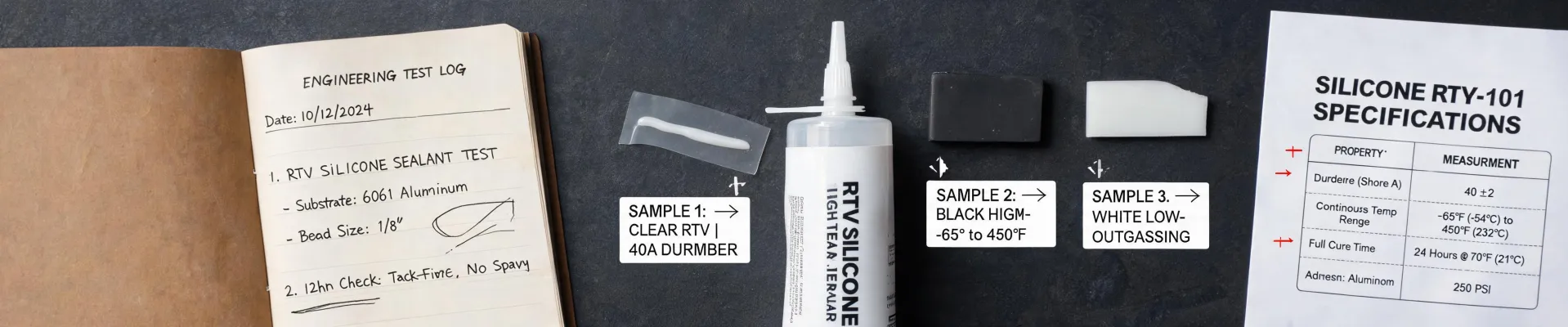
We assemble components that require bonding metal to plastic. We used to use a two-part epoxy that needed 24 hours to cure. The adhesive cost was low—maybe $0.03 per joint. But every batch sat on the floor for a full day, tying up work-in-progress inventory.
Two years ago, we tested Momentive's adhesive silicone (part of their GE silicone heritage). It cured in 45 minutes to handling strength. The adhesive itself was more expensive—about $0.05 per joint. But here's the kicker: we turned our assembly throughput from 50 units per day to 200 units per day. The floor space freed up alone saved us roughly $1,800 in annual rent allocation (our accountant calculated that).
Honestly, I hesitated at first. I thought, “Am I really going to pay 67% more for glue?” But our production manager convinced me to run a 30-day trial. By the end of week two, we had recouped the difference through faster order fulfillment. Bottom line: the higher-priced adhesive was actually a cost saver because it let our process run faster.
Argument 3: The Momentive brand effect—consistency that eliminates inspection
One of the biggest time-wasters in our workflow is incoming quality inspection. When you buy from generic suppliers, you have to check every batch for batch-to-batch variation. We were spending about 6 hours per week on material QC. That's 300 hours a year—or about $9,000 in labor cost.
After we standardized on Momentive products (their silicone rubber, foam, and adhesives), our inspection time dropped to 1 hour per week. Why? Because Momentive's process control (legacy from GE Silicones) produces consistent material properties. The official data sheet tolerances are tight, and in our actual orders over 4 years, less than 0.5% of batches fell outside spec. That kind of reliability means we can skip most of the QC and trust the material.
I'm not saying every supplier is bad. But I am saying that a well-established brand with documented process standards—like Momentive—saves you the hidden cost of inspection and rework. Put another way: you're paying for consistency, not just chemistry.
What about the critics? 'You're just paying more for a name.'
I've heard that argument. And honestly, it's valid in some cases. If you're buying commodity materials with no performance requirements, then yeah—brand might not matter. But for engineering applications where material failure means product returns or safety issues, the cost of 'cheap' materials skyrockets once you include liability and brand reputation. We had a $30,000 recall once because a cheap gasket failed. You don't forget that kind of lesson.
Now, I'm not a process engineer, so I can't claim to know the optimal workflow for every factory. What I can say from a procurement perspective is: when you optimize for efficiency—fast cure times, consistent quality, fewer rework loops—your total cost of ownership drops. That's why I now prefer a slightly higher material price if it comes with proven process reliability.
Efficiency isn't just a buzzword—it's your next cost-savings lever
I wish I had realized this earlier. I spent my first four years chasing pennies on material cost, while the real savings were hiding in process inefficiency. If you're still comparing PE foam vs. EVA foam based solely on unit price, or choosing adhesive silicone solely on the sticker cost, I'd encourage you to look at the full picture: how much does each material cost after you factor in inspection, rework, downtime, and throughput?
We've been using Momentive silicone products (including their silicone foam and adhesive silicone) for three years now. Our total materials cost is about 8% higher than before. But our overall production cost per unit has dropped 13% because we move faster and fix less. That's the efficiency dividend. And it's not just about Momentive—it's about choosing any supplier whose product quality lets you simplify your process.
But if you want my recommendation: start with a conversation with Momentive's technical team. They'll help you match the right material—be it dense polyurethane foam, silicone rubber, or adhesive silicone—to your manufacturing flow. Because the cheapest material is the one that doesn't stop your line.