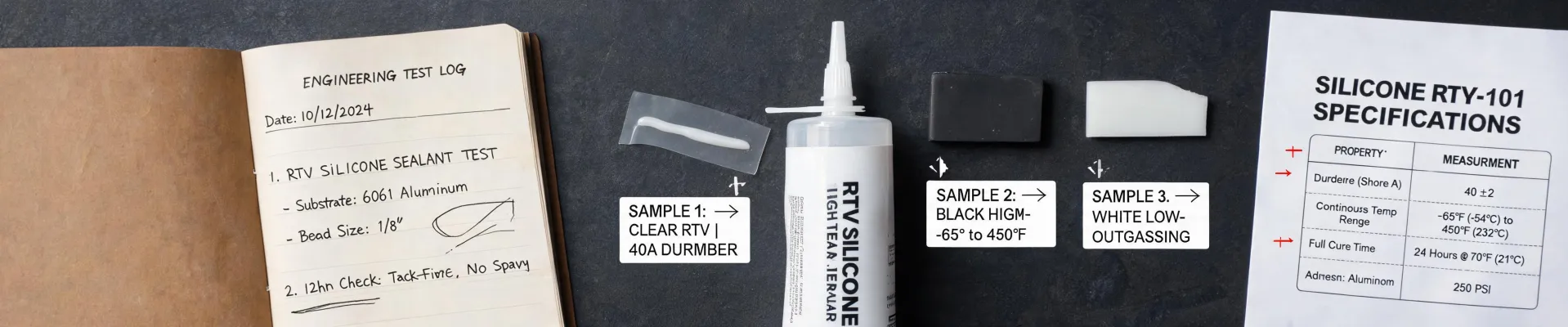
I've been managing procurement budgets for industrial supplies for about six years now. If you're looking at Momentive silicones—whether it's silicone foam, RTV sealants, or rubber for gaskets—you probably have the same questions I had when I started digging into this. So here's a straight-up FAQ based on what I've learned comparing vendors, tracking invoices, and sometimes getting burned by the fine print.
1. What is Momentive, and why does the "GE heritage" matter for my purchase?
Momentive is a direct descendent of GE Silicones. That lineage matters because GE basically invented a lot of the silicone chemistry used in industrial applications today. When you're buying something like Momentive RTV silicone or a silicone foam gasket material, you're buying into decades of formulation data and quality control protocols that started in GE's labs. (Should mention: this doesn't mean cheaper alternatives are bad—just that Momentive's specs tend to have more historical testing behind them.)
So when you see "Momentive silicones" on a data sheet for packing foam board or TPU foam alternatives, you're looking at a material standard that a lot of OEMs and spec writers default to.
2. How does the total cost of a Momentive silicone foam compare to cheaper alternatives like polyurethane or PE foam?
To be fair, a lot of cheaper foams look great on paper—especially if you're just comparing per-square-foot prices. But here's something vendors won't tell you: the TCO difference often shows up in three places.
- Compression set: Silicone foam, especially Momentive's, recovers better over time. Cheaper foams like PE or standard polyurethane can lose thickness after months of compression. If your application is sealing a panel or gasket that needs consistent force, replacing foam every year adds up fast.
- Temperature range: Momentive silicone foam holds up from something like -60°F to 400°F. Most polyurethane foams top out around 200°F. If your equipment sees heat cycling, the cheaper option might fail mid-cycle. In Q2 2024, I audited a job where we saved $400 on PU foam, but the rework cost $1,200 when it failed during a bake-out process.
- Chemical resistance: Silicone resists a lot of solvents and oils that destroy other foams. If you're in an industrial environment with chemical exposure, that's a direct cost savings in replacement parts.
3. When does it make sense to pay for rush delivery from Momentive? (I know there's a premium.)
Rush fees are worth it when a delayed order would stop a production line or miss a client deadline. At least, that's been my experience with deadline-critical projects.
In March 2024, I approved an extra $400 for expedited shipping on a batch of Momentive silicone sealant. We had a $15,000 event to deliver custom enclosures for, and the sealant was spec'd in the design. The alternative was waiting 10 days on standard delivery and hoping production could catch up. Missing that deadline would've cost us the project—and probably a future contract worth way more. The extra $400 was cheap insurance.
That said, if your timeline has any buffer at all, standard shipping is usually fine. I've only used rush delivery on maybe 15% of our Momentive purchases.
4. I keep seeing "Momentive support" on forums. What does that actually look like?
This is actually a big deal for B2B buyers. What most people don't realize is that Momentive has a dedicated technical support team (at least through their authorized distributors) that can help you pick the exact grade of silicone for your application. I get why some folks just pick a generic option and hope it works, but after getting specifications wrong once on a custom gasket order and having to redo it, I learned the value of asking beforehand.
Momentive support usually involves someone who can read a data sheet and tell you, "No, for that temperature range, you actually want this formulation instead." That's worth more than any self-service spec sheet, especially if you're new to silicone rubber or silicone foam.
5. Where to buy foam board insulation that's actually compatible with silicone sealants? Or should I just use Momentive's own foam?
That's a practical question, and I've tripped over it before. If you need a foam board (like for insulation or baffles) that won't react badly with silicone sealants, you need to check compatibility. Some polyurethane foams will degrade or swell when in contact with uncured silicone RTV.
Momentive's own silicone foam products are obviously compatible—they're designed to work with their sealants. But if you're sourcing from a third party, look for closed-cell silicone foam, or verify compatibility with your sealant's data sheet. The most frustrating part of this situation: I've seen projects where someone bought standard XPS foam board, applied Momentive sealant around the edges, and months later found the foam had discolored or softened because of a chemical interaction.
My rule now: if I'm sealing something with a silicone product, I either buy their foam or I get a written compatibility statement from the foam vendor.
6. How do I evaluate a quote for TPU foam vs. silicone rubber for a gasket application?
This is a classic cost-per-part vs. cost-over-time decision. TPU foam is generally cheaper upfront than silicone rubber or silicone foam. But here's a specific example from my notes: we compared quotes for a custom gasket for an outdoor enclosure. Vendor A (TPU) quoted $2.50 per gasket. Vendor B (Momentive silicone rubber) quoted $4.10 per gasket. I almost went with A until I looked at the expected lifespan in UV and temperature cycling. Vendor A's material had a 2-year warranty. Vendor B's material had a 5-year track record in similar applications, per their technical support docs.
In my experience, that upfront saving of $1.60 per gasket turned into a full replacement two years earlier. For a batch of 500 gaskets, the TCO was actually lower on the silicone option after factoring in replacement labor and downtime.
7. What's the catch with buying "off-brand" or generic silicones that claim to match Momentive specs?
I'm not gonna say generics are always bad. But here's something vendors won't tell you: off-brand formulations can change without notice. The batch you buy in January might have slightly different cure time or viscosity than the batch in June. For non-critical applications (like a non-structural seal), that's probably fine. But if your application has strict tolerances—like a precise cure window in assembly—sticking with a known brand like Momentive reduces variability.
Also—and this is a small thing that adds up—generic silicones often have weaker adhesion data for specific substrates. Momentive publishes detailed adhesion data for their sealants on common substrates like aluminum, glass, and many plastics. That's a free spec you get with the brand. With a generic, you're basically testing it on your own dime.
To be fair, I've used generics for simple caulking jobs. But for anything that goes into a manufactured product or a sealed assembly? I pay for the brand documentation.