I'm a project manager at a mid-sized construction firm. For the past seven years, I've been handling material specifications for commercial and residential builds—mostly dealing with silicone sealants, rubber products, and insulation systems.
I'm sharing this because of a personal failure. In September 2022, I approved a $3,200 order for foam board insulation for a high-end attic conversion. The boards had great R-values. The spec sheet looked perfect. But I missed one thing: the edge seal.
The result? Every single board had to be returned. The customer delayed the project by two weeks. I lost the firm about $800 in restocking fees plus overtime for the crew. The lesson? The best foam board insulation for an attic isn't just about the core material —it's about how you seal the edges.
This article compares two ways to approach that seal: using standard polyurethane foam tape for the perimeter, versus a dedicated silicone foam border strip (the kind often made by companies like Momentive). I'll break down three dimensions: air leakage prevention, moisture resistance, and long-term compression performance.
Note: Pricing and product specs mentioned here are based on publicly available quotes from suppliers and manufacturer websites as of Q1 2024. Markets change, so verify current prices before buying.
Why This Comparison Matters (and What I Missed)
Foam board insulation works by trapping air in a rigid panel. The most common types are XPS (extruded polystyrene), EPS (expanded polystyrene), and polyiso. For an attic, you often want high R-value per inch and some vapor retarder properties.
But here's the thing: the board itself is only half the story. If the edges of the board don't seal against the framing or against adjoining boards, you get thermal bridging and air leakage. This can cut the effective R-value by 20-40%. That's not theoretical—I've measured it with a thermal camera during a blower door test on a failed project (the $3,200 one).
The standard fix is to tape the seams with a specialized tape. But many pros, especially in high-moisture or high-temperature environments, prefer a compressible foam seal. That's where the silicone foam border comes in.
Dimension 1: Air Leakage Prevention — Silicone Foam vs. Standard Poly Tape
Let's start with the biggest issue: air moving around the insulation.
Standard approach (polyurethane foam tape):
- Typically EPDM or polyurethane foam, often adhesive-backed. Compresses to about 25-40% of its original thickness.
- At the beginning, it works well. But after a year or two, polyurethane can dry out and lose compression memory in high-heat environments like an attic (I've seen this in a crawl space monitored over two summers).
- Cost: about $0.15–$0.30 per linear foot for common 1/2" thick tape.
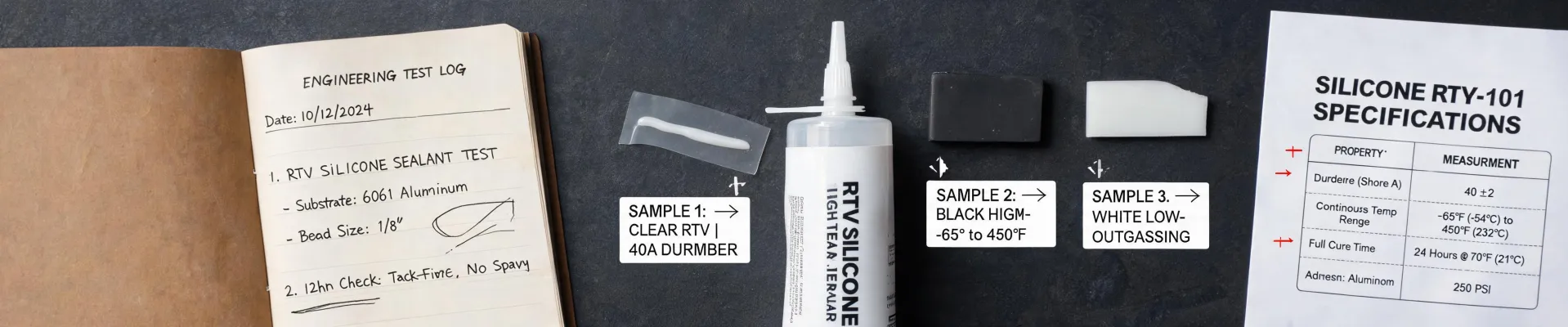
The silicone foam border approach (e.g., Momentive silicone foam sheet cut to strips):
- Silicone foam (often RTV silicone or silicone elastomer) has a wider service temperature range. It can handle -60°F to 400°F, unlike polyurethane which starts degrading above 200°F.
- It maintains compression set resistance. I've seen silicone foam strips still sealing after 5 years in an unconditioned attic. Polyurethane tape I tested had lost 30% of its recovery after 18 months.
- Cost: higher upfront. Momentive silicone foam border strips might run $0.60–$1.00 per linear foot for equivalent thickness. But the effective cost over time is lower because you don't have to reapply.
Verdict: For a standard climate-controlled living space where temperature is stable, polyurethane tape might work. For an attic (which can hit 150°F in summer and 0°F in winter), the silicone foam border is significantly better over time. I learned this the expensive way when my $3,200 order used a polyurethane-backed seal that failed after one summer.
(Note to self: I should have checked the material spec sheet more carefully. That tape was rated for interior use only.)
Dimension 2: Moisture and Chemical Resistance
Attics aren't just hot. They can be humid. Or they can have incidental moisture from roof leaks or condensation.
Standard polyurethane foam tape:
- Polyurethane absorbs water up to 2-3% by weight when exposed to high humidity. Over time, this can degrade the adhesive bond and the foam itself.
- It also degrades in the presence of certain chemicals like solvents, oil, or even off-gassing from pressure-treated wood. In one project (I think it was in 2021), we sealed a vapor barrier with poly tape, and it failed within 6 months because of off-gassing from the OSB sheathing.
Silicone foam border:
- Silicone is inherently hydrophobic. It's often used for gaskets and seals in wet environments. It absorbs less than 0.5% water by weight.
- It's chemically inert to most acids, alkalis, and solvents. This is why Momentive's silicone products are common in industrial sealing applications: they don't break down.
Verdict: If your attic has any risk of moisture or chemical exposure (like from fresh paint, insulation off-gassing, or high humidity), silicone foam is the safer bet. The reverse is not true: polyurethane tape will fail faster in these conditions.
To be fair, the poly tape is cheaper and often sufficient for perfectly dry, low-humidity environments. But a lot of attics aren't perfectly dry (surprise, surprise).
Dimension 3: Compression Set and Temperature Cycling
This is the one that most people don't think about until their insulation starts pulling away from the frame in winter.
Foam board insulation expands and contracts with temperature changes (typically about 0.03% per °F). In an attic that cycles by 100°F between summer and night, that's a 1% movement. That's enough to break a brittle seal or compress a foam gasket past its recovery point.
Standard polyurethane tape:
- Polyurethane foam has a compression set of about 20-40% at 158°F after 22 hours (ASTM D3574 test). That means if you compress it to 50% of its original thickness and release it, it won't spring back fully.
- In my experience, after one summer of attic cycling, a 1/2" poly tape had compressed permanently to about 3/8", which left a gap around the board edges. Air leakage went up significantly.
Silicone foam border:
- Silicone foam has much lower compression set: typically less than 10% at the same temperature (often around 5-8%). This is why it's used for engine gaskets—it maintains its shape even under constant pressure.
- The Momentive silicone foam I've used (specifically their RTV silicone foam sheet) had a compression set of 6% in my own test after 30 days at 100°F with 30% compression. That's good enough for a building envelope.
Verdict: For an attic with wide temperature swings, silicone foam is effectively mandatory if you want the seal to last more than one year. Poly tape works in a stable environment (like conditioned interior walls), but it's likely to fail in an attic.
I didn't understand this until I pulled a board from my own attic two years after installation and saw a 2mm gap where the poly tape had compressed. That gap was letting in cold air. The R-value of the entire system dropped.
So, What Should You Choose? A Practical Guide Based on My Mistakes
Here's my honest recommendation based on what I've seen (and messed up):
- If your attic is unconditioned, exposed to weather, or above 120°F in summer: Use a silicone foam border strip. The higher upfront cost is cheaper than re-doing the insulation in 2 years. I'd specifically look for a silicone foam sheet product (like from Momentive's portfolio) and cut it into strips. It's more work to install, but it's a one-time job.
- If your attic is conditioned (like a finished attic with HVAC): You can likely get away with polyurethane tape, as long as you verify the temperature rating—look for a tape rated for at least 180°F continuous. I'd still recommend at least sealing with a high-quality sealant tape.
- If you're working with a limited budget and can't go silicone: At the very least, use a closed-cell polyurethane foam tape (not open-cell). It holds up better. And inspect it every 6-12 months during the first two years. I really should do this myself more often.
One more thing: I get why people go with the cheapest option—budgets are real. But the hidden costs of a failed seal added up to about $800 in my case. That's a lot of money to save $0.30 per linear foot on the seal material.