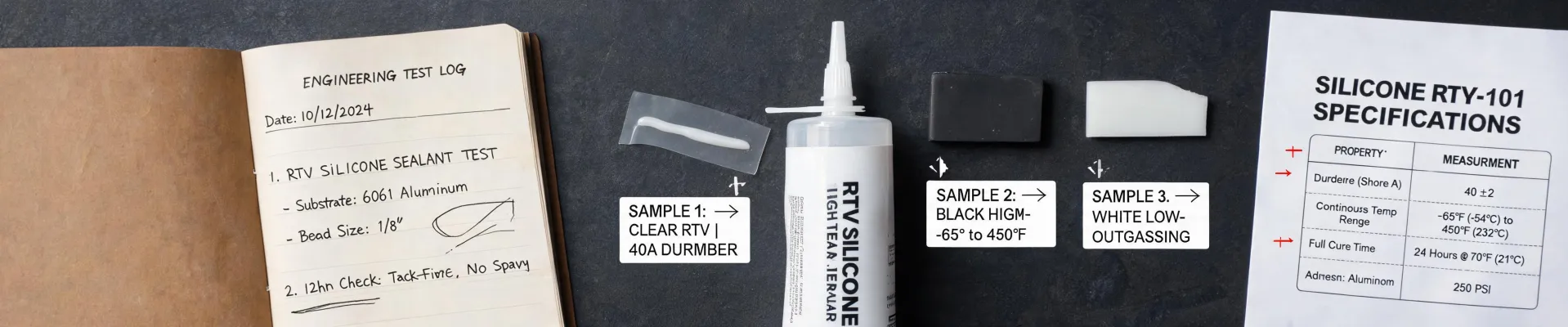
Here's the thing I wish someone told me before I started ordering silicone parts: Momentive silicone isn't just "rubber" — it's a family of carefully engineered materials, and using the wrong type for your application is a quick way to burn through your budget. In the past 18 months, I've personally approved over $3,200 worth of silicone orders that ended up in the trash. That's not including the overtime and the awkward calls to my manager. This article is the checklist I now use before every single silicone order — the one that's caught 47 potential problems so far.
Why You Can Trust This
I'm a production supervisor at a custom rubber parts facility. For the last six years, I've ordered, tested, and occasionally ruined silicone products — including several Momentive lines. My daily work covers everything from silicone washers to rubber wheel tools used in finishing stations. I've made the classic mistakes, and I've documented them so our team doesn't repeat them. I'm not a chemist, and I'm not a Momentive engineer — but I've read a lot of datasheets, and I've learned what to check before hitting "order".
My experience is mostly with 20 to 40 durometer liquid silicone rubber and RTV mold-making compounds. If you're working with high-consistency rubber or fluorosilicone, some of this won't apply. I'll flag that where it matters.
Mistake #1: Treating Silicone Sealant Like Mold-Curing Rubber
In March 2023, I wanted to make a quick silicone mold for a small prototype bracket. I grabbed a tube of Momentive sealant from our maintenance shelf, squeezed it into a plastic box, and pressed the part in. It looked fine that afternoon. Two days later, it was still sticky on the bottom, and the details were garbage. That mold was useless. I'd wasted about $11 on the sealant — but then I spent another $160 on the actual mold-making silicone from Momentive, plus a weekend waiting for it to cure.
The lesson: Sealant and mold-making silicone are completely different products. Sealant cures with atmospheric moisture and stays flexible. Mold-making RTV silicone needs a catalyst, usually releases byproducts while curing, and is designed to capture fine details. If you search "how to make silicone mold" online, you'll see people using sealant, and it does work for some no-pressure molds with simple shapes. But for anything with undercuts or fine texture, it's a gamble. And a gamble isn't worth it if you're making parts with tight tolerances.
Here's the counterintuitive part: even the most expensive sealant from Momentive won't perform like a basic RTV mold rubber. They're in different product families. Check the product number before you order.
Mistake #2: Ignoring Durometer on Silicone Washers
Silicone washers seem simple. They're not. In 2022, I ordered 5,000 silicone washers for a food-processing machine. I specified "silicone" and "good quality" — I didn't specify durometer. What arrived was a 70 Shore A washer that was way too stiff for the application. The customer complained about leaks, and we had to redo the whole run. That mistake cost us $2,100 in remanufacturing and a 3-day delay.
Durometer measures hardness. For washers and gaskets, the right range depends on the pressure, temperature, and surface finish of the mating parts. Softer (20-40 Shore A) seals better under low clamping force. Harder (50-70 Shore A) resists extrusion and wear. With Momentive silicones, the datasheet will list the durometer for each product. It's a two-minute check that saves you from disaster.
The "rubber wheel tool" analogy works here: a soft rubber wheel is great for polishing, but if you put it on a high-speed cutoff tool, it'll melt. The wheel isn't bad — it's the wrong toolbox for the task. Same with silicone washers.
Mistake #3: Not Accounting for Cure Chemistry
When I was new, I assumed all RTV silicones cured the same way. They don't. Some cure with condensation (releasing acetic acid or alcohol), and some cure with addition (platinum-catalyzed). This matters for two reasons.
First, if you use a condensation-cure silicone in a closed mold with certain metals, the byproducts can corrode the metal. Second, platinum-cure silicones can be inhibited by contact with sulfur, latex, or some epoxies — meaning they'll never fully cure where they touch those materials.
I learned this the hard way when I tried to make a mold of a wax master coated with a release agent that contained sulfur. The silicone stayed runny for four days. I called Momentive's tech line (after finally getting into the portal — that's another story) and the engineer told me to check the cure chemistry. The fix was simple: use a different mold release or switch to a condensation-cure product.
That experience is why I now keep a small notebook with the cure type of every silicone in our inventory. It's saved us at least twice already.
Mistake #4: Working Without Current Technical Data
Here's a mundane but expensive trap: relying on secondhand specs. I once ordered a high-temp silicone sheet for a heat press application. A colleague gave me the temperature rating from memory: "It's good to 260°C." Turns out that was for a different grade. The sheet we received was rated to 230°C, which was enough for normal work but not for the hot spots in our process. We found out when it started to smoke.
You'd be surprised how often this happens when people can't access the manufacturer's official data. In our company, we've had employees use their personal phones to Google "momentive login" because their work accounts weren't set up, only to land on outdated reseller pages. Always download the official TDS and SDS from the Momentive website for the exact product number you're using. Don't rely on a screenshot from 2019 or a sticky note on the shelf.
If you can't find the right spec, email an applications engineer. I've done that twice, and I got a response within a day. It's much cheaper than a 40-kg order with the wrong temperature rating.
Boundary Conditions: When My Lessons Don't Apply
I should be honest about the limits of this advice. My experience is based on about 200 orders, mostly for FDA-compliant silicone and general industrial parts. I haven't worked with liquid silicone injection molding at high volumes, and I've only used a few of Momentive's product lines. If you're doing medical device manufacturing or aerospace components, bring a specialist in. The stakes are higher, and the material requirements are stricter.
Also, "how to make silicone mold" with basic RTV is doable in a garage, but if you need production-grade molds that last for hundreds of parts, consider a two-part addition-cure silicone with a vacuum chamber. That's not a shortcut — it's a different process.
And yes, sometimes the cheaper option is fine. For non-critical spacers or dust covers, an off-brand silicone washer at half the price might be acceptable. But if it fails, the downtime cost will probably be more than the savings. Run the math before you save the money.
Bottom line: Momentive makes excellent materials. But "excellent" doesn't mean "foolproof." The mistakes I made were almost all preventable — and most of them were because I treated silicone like a generic rubber instead of reading the spec sheet.
If you've made it this far, maybe you're about to order silicone for the first time. Check the durometer. Check the cure system. Download the datasheet. And save your money for the parts you actually need.