Someone in our design team asked me the other day: can a Cricut cut foam board?
My automatic answer was yes—with the right blade, a strong mat, and probably a few passes. Then they added the next detail: they wanted to make EVA foam armor. That changed everything. Not because a Cricut can't cut foam board, but because foam board isn't EVA foam. If you don't make that distinction before you order, you'll waste money and miss a deadline.
I manage purchasing for a 45-person prototyping shop. I took over this job in 2021, and I'm responsible for roughly $160k in annual material orders across a dozen vendors. That means I'm the person who turns 'we need foam' into a purchase order. Over the last four years, I've learned the hard way that the name of a material is not the same thing as the material.
The Surface Problem: Yes, a Cricut Can Cut Foam Board
Let's get the literal answer out of the way. 'Foam board' usually means a foam core with a smooth paper or styrene face. It's what you see in presentation boards and architectural models. A Cricut Maker can cut foam board with the Knife Blade. Older machines may need a different blade or multiple passes. Check current settings in Cricut's material guide (cricut.com, accessed April 2025). You'll want a StrongGrip mat and a test cut first.
EVA foam is different. It's a closed-cell, rubbery material, often 4mm to 10mm thick, with no paper face. It's the stuff of cosplay armor, floor mats, and protective padding. You can cut it with a machine, but not the same way you cut foam board. Thick EVA foam will crush or shred under a Cricut blade if you treat it like presentation board. The beveled cuts you need for armor are usually done with a knife and a bevel cutter.
So when someone asks 'can a Cricut cut foam board?' the answer is yes. But if they actually need EVA foam armor, they're asking the wrong question.
The Deeper Problem: Material Names Are Shorthand, and Shorthand Costs Money
This is where my purchasing experience kicks in. Otherwise careful engineers order 'foam,' 'rubber,' or 'silicone' and expect the supplier to fill in the gaps. It doesn't work that way.
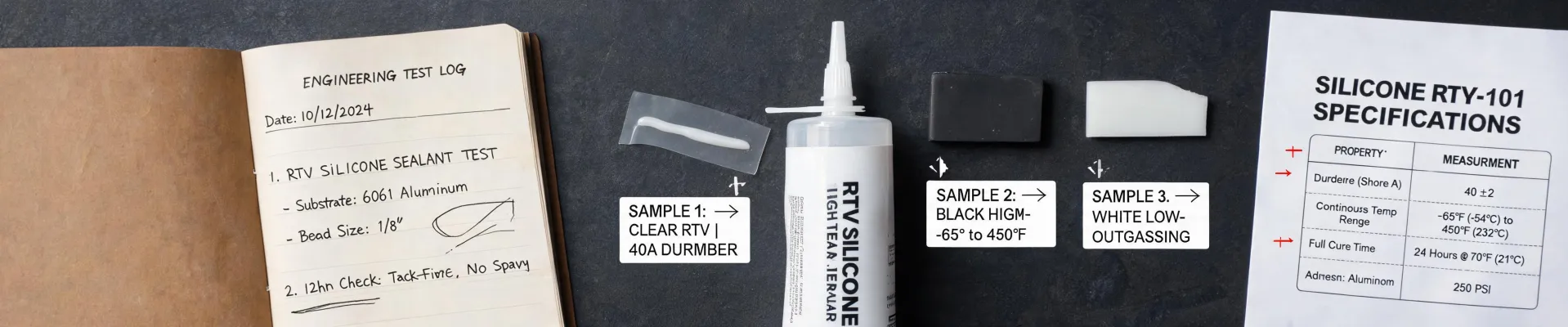
In my first year, I made the classic specification error: I assumed 'standard silicone sheet' meant the same thing to every vendor. It didn't. I asked for GE Momentive silicone because the name sounded reliable—it was. But 'GE Momentive silicone' is a brand family, not a product grade. Momentive Silicones makes dozens of silicone grades. Some handle continuous high heat; some don't. Some are soft enough to seal, some are hard enough to machine. Without a durometer and a temperature rating, the supplier is guessing. Our 'saving' became a $600 redo.
I understand why people search for 'GE Momentive silicone' when they need silicone. The GE Silicones heritage adds confidence. But that phrase only gets you to the right catalog, not the right grade.
The same thing happened with rubber sheet. The Western Rubber quote request for a heat-press silicone sheet came back with two questions I couldn't answer: what durometer, and what service temperature? I'd put 'GE Momentive silicone' on the request and assumed that was enough.
Western Rubber, the source we called, asked me to go back to the engineer for the actual application details. Once we explained the real use—intermittent 300°F, sealing, peel resistance—we got a specific grade. That conversation is the difference between buying a name and buying a material.
What the Wrong Material Actually Costs
Here's the part that still makes me grit my teeth. A few years ago, a designer asked for 'foam for armor.' I saw a cheap option and ordered presentation foam board. The project needed EVA foam—specifically 2mm, 5mm, and 10mm sheets for different armor sections. I saved about $24 by ordering the wrong thing. After the first test piece tore, I had to place a $135 rush order for actual EVA foam and redraw the patterns. Net loss was more than $110 plus two working days.
The cost wasn't just the reorder. It was the trust hit when I had to tell the VP that a prototype was delayed because of a material mix-up. The designer lost three hours. I looked like I didn't know what I was doing. That moment taught me to think in terms of downside, not just price.
The upside of trying to make the wrong foam work was about $24. The downside was a broken part, additional labor, and a missed milestone. It wasn't a real trade-off.
Sourcing Isn't Just a Vendor Problem
I have mixed feelings about vendor consolidation. On one hand, fewer vendors means less paperwork and faster ordering. On the other hand, having redundant sources helped us during a supply chain delay last year. The lesson wasn't 'one vendor is bad.' It was: the order form has to be clear. Every time.
We moved our material requests from phone calls and sticky notes to a shared online form. Turnaround went from five days to two. Engineers still describe their projects; they just have to fill in the blanks that matter: thickness, hardness, temperature, quantity. That automated form eliminated most of the follow-up questions. That's why I'm a believer in efficiency—not because process is fun, but because clear specs reduce the number of mistakes before they happen.
The Fix: Tell the Supplier the Problem, Not Just a Brand Name
So here's my current policy. If you ask me 'can a Cricut cut foam board?' I'll say yes, and then I'll ask what you're actually making. If you're cutting presentation boards, use a Knife Blade and a StrongGrip mat. If you're making EVA foam armor, buy EVA foam, not foam board. Use a sharp knife, a bevel cutter, and a heat gun for shaping.
And for any material order, don't rely on a brand name alone. 'GE Momentive silicone' gets you to Momentive Silicones, but the order still needs more specifics:
- Durometer, if it's rubber or silicone (Shore A)
- Maximum service temperature
- Thickness—like 2mm, 5mm, or 10mm EVA foam
- Any compliance requirement like food contact or UL flame rating
- Application details—what it touches, how it moves, how long it needs to last
Durometer, temperature, thickness. In that order.
I've stopped treating 'can a Cricut cut foam board?' as a machine question. It's a material-identification question in disguise. The tool is only as good as the spec you give it. The same goes for sourcing. Whether you're ordering Momentive Silicones from Western Rubber, or a stack of EVA foam for an armor project, the vendor can work with you—if you can tell them what the material is supposed to do.
That's the real answer. Yes, a Cricut can cut foam board. But your problem probably isn't the Cricut. It's the gap between the name on your request and the material on your bench. Fill that gap, and everything else gets easier.