Every week, someone types is rubber biodegradable into a search engine. It's a fair question. But as a quality manager who audits about 200+ unique material submissions a year, I can tell you that the question often goes nowhere. The answer depends entirely on what you're actually going to buy.
Take two examples from my own review queue: a batch of nitrile rubber balls for check valves and a roll of rubber sheet for industrial gaskets. Both are called 'rubber.' Both are petroleum-based. But the first might fail within months if exposed to ozone, while the second could last years in water service. Neither is 'biodegradable' in the same way a pine cone is. If you're asking just is rubber biodegradable, you're missing the point.
The Surface Problem: The Question Gives False Comfort
The first thing I run into is people looking for a simple yes/no stamp. They want to check a box on a sustainability questionnaire or pick a material for a green product. So they search, see something like 'natural rubber is biodegradable,' and assume any rubber product will break down in a landfill.
That assumption can backfire. Biodegradability isn't a single property. It depends on polymer chemistry, additives, crosslinking, thickness, and the environment where the product ends up. A thick nitrile rubber ball might take decades to show visible degradation. A thin natural rubber sheet might break down faster, but it also might swell and crack in environments that a synthetic rubber would handle fine.
So the simple answer to is rubber biodegradable is: probably, eventually—but not on your product's timeline. Which is not a very satisfying answer.
The Deeper Problem: 'Rubber' Is a Category, Not a Material
The real issue behind the question is mental. We use one word for dozens of different chemistries. That's like asking 'is metal magnetic?' Well, iron is. Aluminum isn't. Both are metal. The word 'metal' doesn't tell you the alloy.
With rubber, you've got:
- Natural rubber (NR): polyisoprene, has some biodegradability, but can degrade under heat and ozone.
- Nitrile rubber (NBR): good oil resistance, used in seals and balls; extremely slow biodegradation.
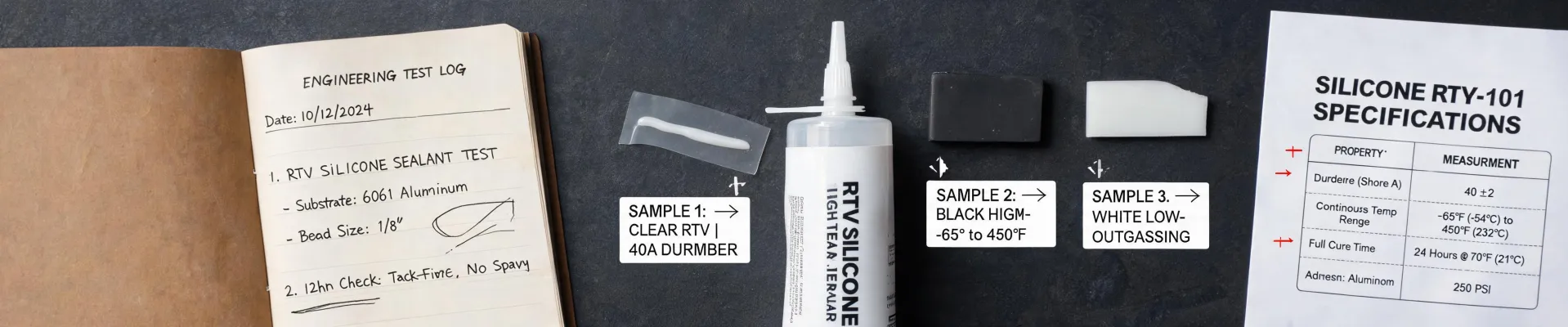
- Silicone rubber (made by companies like Momentive): silicon-oxygen backbone, excellent temperature and chemical resistance, and very little natural degradation.
Even within a category, the compound matters. Fillers, plasticizers, and curing agents all affect final performance and degradation rate. I've seen two batches of 'the same' NBR from different vendors behave completely differently in a hot water test. (That's the kind of thing that keeps quality people up at night.)
I remember a project where we agreed on a standard rubber sheet. The client meant a general-purpose EPDM gasket material. The supplier heard whatever is cheapest. The mismatch didn't surface until the first sample failed a solvent test. That communication error cost us a week and a half of rework.
So the deeper problem isn't ignorance about biodegradability. It's using a generic label when you need to talk about specific application conditions.
The Real Cost of Getting It Wrong
Let me tell you about a small client we had in Q1 2024. They were using nitrile rubber balls in a beverage line because the previous supplier recommended NBR for its price. The balls were fine for about six months. Then they started hardening and leaking past the check valve. The line had to be shut down twice. Total cost: about $18,000 in lost product and overtime labor, plus replacement parts. The original savings on those balls? Maybe $300.
This is the classic penny-wise, pound-foolish outcome. It happens disproportionately to smaller companies. They don't have a full-time materials engineer to review specs. They rely on the supplier to make the right call. But when your order is small, some suppliers don't bother to ask follow-up questions. They just ship whatever fits the basic description.
I've seen more than one startup lose money because a big distributor treated their $500 order as a commodity transaction. Small doesn't mean unimportant—it means you need a supplier who is willing to be curious.
There's also an environmental cost. Say you avoid synthetic rubber because you've heard it's not biodegradable. But your application actually needs to last ten years outdoors. You switch to a more natural, faster-degrading material. Five years later, it cracks, and you replace it twice as often. That creates more waste, not less.
One more cost issue: regulatory compliance. If your product is sold in Europe, REACH and RoHS may require you to identify specific additives. A supplier that treats small orders as second-class often won't provide that documentation. That alone can delay a launch by weeks.
The wrong question gives false comfort. The right question—what are the service conditions?—prevents this mess.
What to Ask Instead (and What a Small Order Should Trigger)
Here's where the answer gets constructive. When sourcing any rubber product—balls, sheets, custom-molded parts—ask the supplier for:
- The exact polymer family (NR, NBR, EPDM, silicone, etc.) and an ASTM D2000 line callout if available.
- Temperature range, chemical exposure, and whether the part will contact food or drinking water.
- Environmental claims if relevant: do they mean biodegradation, recyclability, or renewable content?
For demanding applications—high heat, oxygen, steam, or long service life—consider a silicone elastomer. Momentive carries the GE Silicones technology legacy. According to Momentive's official website, their silicone rubbers are designed for long-term reliability under harsh conditions. I also check momentive silicone news occasionally because they've published practical sustainability and recycling updates, which is a useful input for procurement conversations.
And if you're a small buyer, don't accept less data just because your order is small. In my experience, the vendors who treat a $200 order with the same diligence as a $20,000 order are the ones worth keeping. Today's sample order might be next year's production run.
The answer to is rubber biodegradable is not the answer you need. Ask what the rubber will be used for, how long it must last, and what failure will cost. That's the question that actually matters.