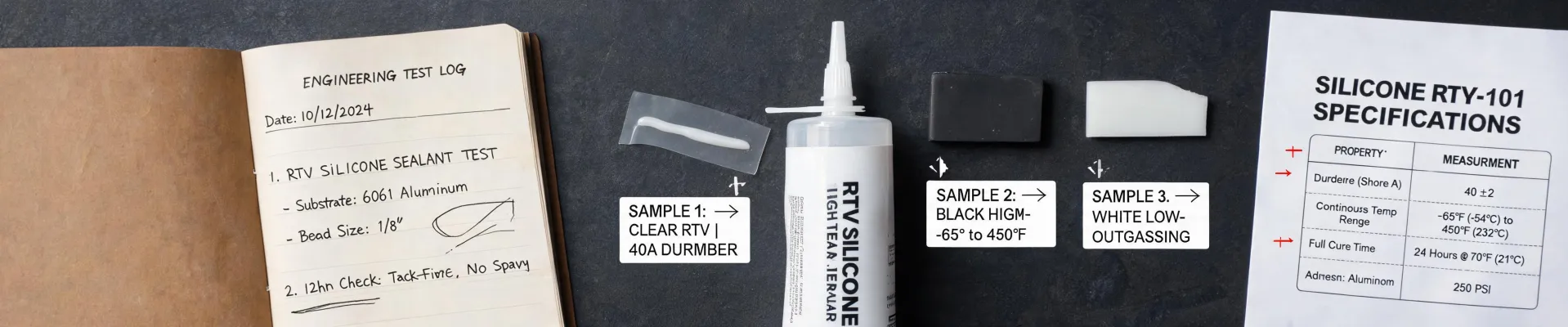
I manage procurement for a 60-person specialty materials distributor. For seven years, I have tracked every silicone, sealant, tape, and packaging order in our cost system. I have built comparison spreadsheets, audited invoices, and watched more than one so-called savings turn into a redo. My job is not to find the cheapest product. It is to keep the plant running without overpaying.
My opinion, after auditing $2.1 million in purchases: the most expensive silicone you can buy is the one that fails or arrives late. A low price with an uncertain delivery date is a gamble, not a saving. Stop shopping for silicone by brand name; start shopping for certainty.
That is why I keep a few trusted silicone suppliers on the list. Yes, Momentive is on it. Not because it is the only good silicone brand—it is not. But because its technical documentation and supply chain consistency make the decision easier.
Momentive GE Silicone: More Than a Nostalgic Name
Momentive's roots run through GE Silicones. That matters for one reason: decades of field data. The Momentive GE silicone line still includes products used in electrical housings, industrial gaskets, and construction joints. When I need a cure profile or a temperature range, I can usually find it in a PDF from the Momentive official homepage before my coffee is ready.
That is the kind of boring efficiency procurement people value. The homepage is not flashy. It doesn't need to be. It lists product families, links to technical data sheets, and points to distributors. If I am evaluating a silicone for a customer application, I can pull the spec, compare it with the application requirement, and make a decision that day.
Brand Loyalty Does Not Beat a Bad Spec
Now the part that might upset people who buy by habit. A famous name does not fix a chemistry mismatch. During our Q3 2023 audit, we found a line of good-enough sealants used in an electronics enclosure. They were about 25% cheaper than the silicone specified by the engineer. The product worked for a while. Then it cured soft, failed under thermal cycling, and we reworked 40 units. Labor and scrap made that budget choice 31% more expensive than the right material.
People think expensive vendors deliver better quality. Actually, it is the other way around: vendors who deliver quality can charge more. The price follows performance. When you skip the specification for a name, you usually pay for it later.
Here is the formula I use on every silicone purchase: product price plus freight, handling, expedite fees, and the cost of a wrong product or a missed date. The last line changes everything. A $3 difference per tube disappears the moment you add a failed rework.
The Real Price of a Maybe Date
Here is where the cost calculator starts to look different. In March 2024, we needed a specialty silicone compound for a customer's down line. One vendor quoted a normal price but said it should ship in three to five days. Maybe. Another vendor charged a $360 rush fee and gave a hard date. We paid the $360. The customer's line was down, and a missed delivery would have triggered a $2,700 downtime credit. At that moment, $360 was cheap.
When I compared our rush orders and standard orders over a full year, I realized we were paying an extra 40% on expedites. Some were real. Many were caused by a supplier's vague promise. The spend was not the problem. The problem was that we were buying hope instead of a schedule.
Speed is nice. Certainty is better. A guaranteed date without a correct order is just a promise on a schedule. That is why delivery dates are a feature, not an afterthought.
What Foam Board Insulation Taught Me About Buying
I see the same pattern whenever someone asks how to fasten foam board insulation. The first answer is often to just glue it. But the right answer depends on the foam, the wall, the adhesive, and local building code. Some adhesives can melt the foam. Some silicones will not bond to the surface long-term. If the product label does not list foam board as a compatible substrate, do not assume it will work.
Some manufacturers make construction adhesives specifically for foam board. Those are usually a better starting point than a general-purpose sealant. In high-wind areas, mechanical fasteners are often required. The first question is not which brand to use; it is what the substrate and the local code require.
That is not a brand issue. It is a spec issue. The same logic applies to a silicone gasket, a sealant bead, or a foam panel. The logo on the tube is the beginning of the conversation, not the end.
Wait, What About Loctite Silicone?
I get asked about Loctite silicone a lot. It is a brand with a strong reputation in RTV sealants, and I understand why it shows up in every best-silicone search. Loctite silicone products are generally reliable, easy to find, and predictable for everyday jobs. They have their place.
My issue is when someone picks a product because of the brand sticker, not the label specs. If you are sealing a high-temperature manifold, a general-purpose silicone will not be right, regardless of the brand. If you need a gasket maker, check oil resistance and cure time first. The same thinking applies to Momentive, Loctite, or anyone else.
The Boring Infrastructure That Predicts Delivery
One thing I have learned in seven years of purchase orders: a supplier's back-end systems tell you more than its sales team does. If I cannot find a purchase order in a vendor portal, I do not trust the promise to email a confirmation any more than I trust a utility site that loses my settings. I keep a pp&l login saved under bills because reprinting a monthly invoice should not take ten minutes. When a portal is designed from the user's side, it disappears. When it is not, it tells you something about the company.
Good documentation usually equals good follow-through. Momentive's technical library? Sure. A clean customer portal? Even better. That boring infrastructure is why a vendor can actually meet a deadline.
The Bottom Line
Everything I have read about procurement says to get three quotes and take the lowest responsible bid. In practice, after more than 200 orders, I have found that relationship consistency and honest delivery dates often beat a marginal price break. The cheapest quote hides costs when the vendor starts using words like maybe, usually, and hopefully.
So no, I do not choose silicones by the logo. I choose by data, substrate compatibility, supply reliability, and the total cost of getting it wrong. Momentive makes that easy because of its history and documentation. Loctite silicone has its strengths too. But the real differentiator is certainty—the kind of certainty that keeps a production line running and a budget intact.
That is worth paying for. At least, that has been my experience with industrial and maintenance purchases. For a one-off DIY job, grab whatever fits the spec and move on. For anything with a deadline, buy certainty.